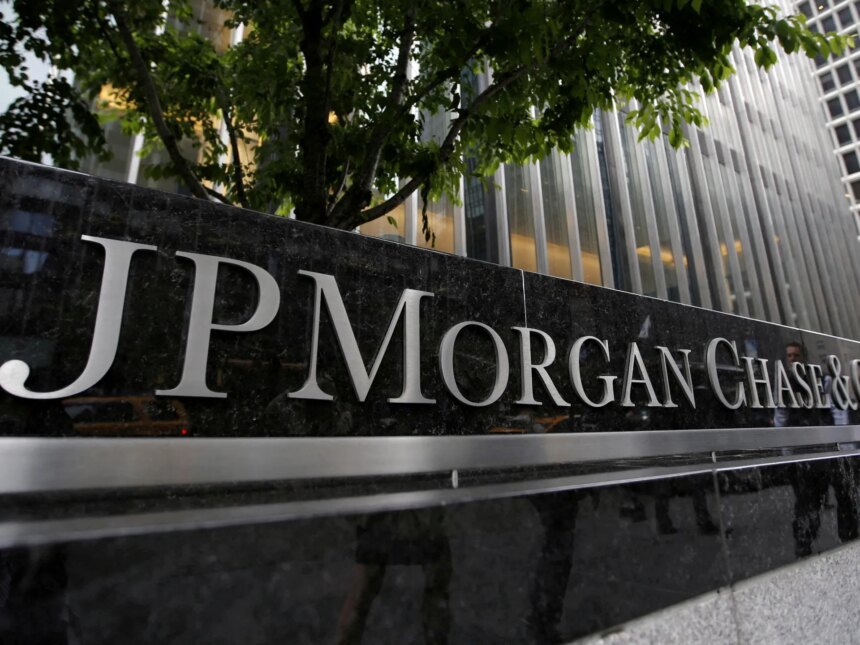
United States President Donald Trump has revived his legal battle against JPMorgan Chase by filing a $5 billion lawsuit, alleging that the banking giant engaged in “debanking”—the process of terminating a person’s or organization’s access to financial services—for politically motivated reasons. The complaint, lodged in a Florida court, asserts that following the January 6, 2021, Capitol attack by his supporters, the bank closed several of his accounts.
In a statement responding to the lawsuit, JPMorgan Chase emphasized that account closures are not influenced by political or religious beliefs but are driven by legal and regulatory risks. The bank stated its regret over such actions but underscored the necessity of adhering to established rules.
While Trump’s complaint is filed in his personal capacity, the issue of debanking echoes a broader narrative that has permeated his presidency. In recent months, the Trump administration has intensified scrutiny of major financial institutions, suggesting they have unjustly closed accounts due to political bias. This led Trump to sign an executive order aimed at preventing banks from denying financial services based on political affiliations.
The concept of debanking, as framed by Trump, appears to be a systemic effort targeting conservatives, although substantial evidence for this assertion remains sparse. A review of over 8,000 complaints to the Consumer Financial Protection Bureau revealed only a handful associated with political or religious discrimination. Critics argue that banks have become arbiters of morality, basing their decisions on reputational risks rather than purely financial concerns, thus entangling themselves in cultural and geopolitical debates.
Interestingly, studies indicate that it is not primarily Trump’s base, evangelical Christians, who face debanking. A report from the Institute for Social Policy and Understanding highlighted that Muslim Americans and Jewish Americans report higher instances of banking difficulties compared to their evangelical counterparts. In fact, 93 percent of Muslim Americans experienced issues accessing banking services, while only 8 percent of evangelical Christians reported similar challenges.
Various industries have long faced restrictions due to perceived reputational risks associated with their practices. Historical instances, such as Operation Choke Point under the Obama administration, sought to curtail banking activities connected to exploitative industries like payday lending. However, this initiative drew criticism for compelling banks to act as moral judges. In the aftermath of new regulations, numerous professionals in sectors like adult entertainment and cannabis found themselves locked out of essential financial services, despite the growing acceptance of such fields in society.
As the public opinion on marijuana continues to shift, banks remain hesitant to fully embrace cannabis-related businesses due to lingering legal ambiguities. In contrast, as the cryptocurrency sector gains traction, expectations have evolved. Historically viewed with suspicion, crypto companies have struggled to maintain banking relationships, but recent executive orders may signal a more accommodating stance from financial regulators.
Trump’s ongoing grievances towards banks may stem, in part, from his complex financial history, including multiple bankruptcies and ongoing legal challenges. Industry experts suggest these factors could rationally lead banks to view him as a higher risk customer—concerns juxtaposed against his claims of political discrimination.
Moreover, Trump has endeavored to punish institutions he perceives as biased against his administration’s ideologies. His rhetoric on debanking serves not only to amplify his allegations of bias but also aims at penalizing entities that oppose his viewpoints. For instance, JPMorgan recently reversed its policy of denying banking services to gun manufacturers, a shift attributed to Trump’s pressure on financial institutions.
As the issue of debanking unfolds, it has sparked a rare moment of bipartisan agreement in Washington, with figures like Senator Elizabeth Warren joining Trump in calls for greater accountability from banks. The discussion raises essential questions about the interplay between financial institutions and political ideologies, as well as the implications of debanking on various communities across the nation. The ramifications of this ongoing legal and political battle are likely to resonate throughout both the financial sector and the broader U.S. political landscape.