









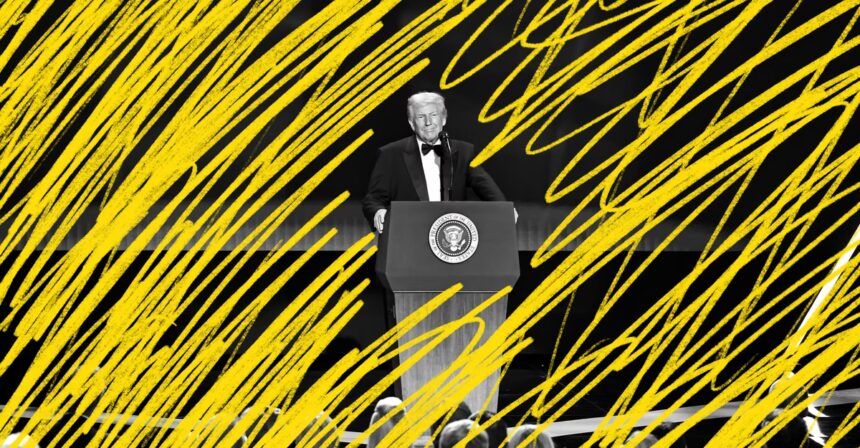
Last night, the Kennedy Center Honors unfolded as a celebration of artistic achievements, albeit under a somewhat surreal and controversial atmosphere that left many questioning the event’s integrity and significance. This annual Washington, D.C.-based spectacle, known for honoring a select group of luminaries in the arts, featured honorees such as Gloria Gaynor, Michael Crawford, Sylvester Stallone, George Strait, and the iconic band Kiss.
While the show has often delivered heartfelt tributes—like Adam Lambert’s stirring rendition of Cher’s “Believe”—last night’s festivities carried an uncanny vibe, resembling a wish granted with unforeseen consequences. Observers noted the absence of more traditional Hollywood faces and the presence of figures associated with the Trump administration, suggesting an awkward blend of politics and performance.
The red carpet scene set an oddly disconnected tone. Celebrities were sparse, and instead, figures like Department of the Interior Secretary Doug Burgum and Commerce Secretary Howard Lutnick were mingling, with Burgum even commenting that Trump was “the most qualified TV host we’ve ever had sitting in the Oval Office.” The president himself arrived fashionably late, accompanied by Melania Trump in a gown that some attendees likened to the architectural style of a prominent local building.
When Trump took the stage, his performance unfurled with a mix of bravado and brashness typical of his public persona. He launched into remarks that included praise of his administration’s achievements and a mix of admiration for the honorees. Yet, the juxtaposition of his comedic attempts with the evening’s artistic tributes created a tension that left many in attendance bewildered.
Tributes to the honorees varied widely in tone and execution. Kelsey Grammer’s tribute to Michael Crawford, for example, was received with mixed reactions; some appreciated the effort while others felt the performance dragged on and lacked the expected celebratory flair. The evening featured various musical segments, including a duo performance of Andrew Lloyd Webber’s “The Music of the Night,” showcasing diverging interpretations that perhaps did little to captivate the audience.
As the event progressed, the entertainment became increasingly eclectic—Feats involving Kiss were intertwined with unexpected appearances by figures like magician Criss Angel, who added a layer of theatrical oddity that diverted attention from the intended honors. The rigid structure of the program contrasted starkly with the celebratory nature of past Kennedy Center events, transforming the night into an unpredictable experience.
The celebration culminated with Gaynor’s performance of her classic anthem “I Will Survive,” delivered with mixed vibes as the atmosphere shifted dramatically with visuals of church-like stained glass intermingling with disco aesthetics. This symbolic clash left many questioning the event’s alignment with Gaynor’s legacy amid an administration perceived as dismissive toward LGBTQ rights.
By the night’s conclusion, it was evident that the Kennedy Center Honors had morphed into a spectacle that not only delighted but also bewildered its audience. Many left wondering how such a deeply-rooted tradition could evolve into an event that functioned almost as a parody of itself, reflecting broader cultural tensions and the complexities of intertwining entertainment with politics.
As attendees exited, dodging past after-party festivities including a chance to pose with a Phantom of the Opera-themed backdrop, the distinct feeling prevailed that the event had transformed from a celebration of achievement into a mirror reflecting the disconnection and challenges of the current cultural landscape. In this space where art meets ego, one can’t help but ponder if perhaps the true tragedy lies in the dissonance between aspiration and reality.