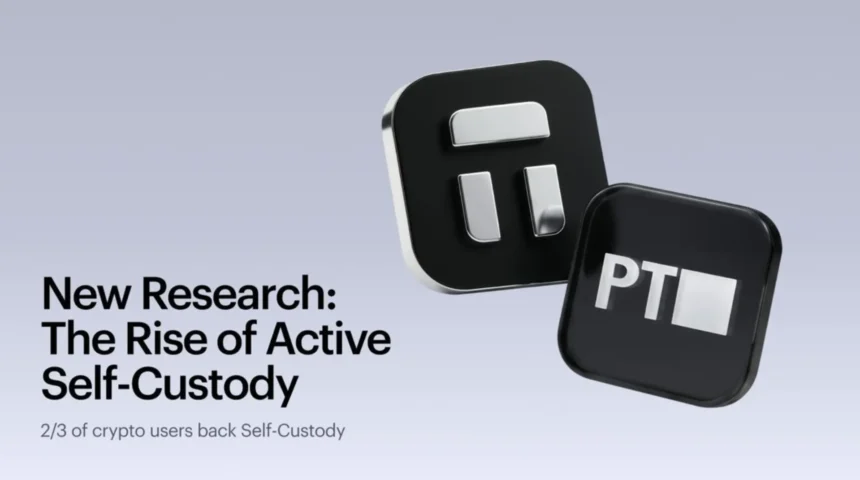
A recent report has shed light on the evolving landscape of cryptocurrency usage, revealing significant insights about self-custody and the adoption of cold wallets. While a substantial 66% of cryptocurrency users deem self-custody as critical, only 15% currently utilize cold wallets, highlighting a discrepancy between perceived importance and actual use.
Swiss hardware wallet manufacturer Tangem released findings from its report, “From Custody to Participation: The Rise of Active Self-Custody.” The report was conducted in collaboration with consumer research and strategy insights firm Protocol Theory, gathering data from approximately 3,200 U.S. crypto users aged 18 and older.
The analysis indicates that self-custody is diversifying beyond mere asset storage, evolving into a multifunctional tool for managing and utilizing cryptocurrency. With self-custody, users maintain control over their private keys, allowing them to engage with their crypto assets actively. The report noted that cold wallet users are involved in more than just holding assets; they engage in buying, selling, managing stablecoins, and using on-chain applications such as decentralized finance (DeFi) platforms.
Tangem’s own growth reflects this trend, reporting a revenue increase of around $60 million last year—an impressive rise of over 100% compared to the previous year. Additionally, the number of monthly active users surged by 50%, indicating a growing interest from users who wish to manage their crypto more interactively rather than passively storing it.
Interestingly, the report challenges the prevailing view that hardware wallets serve primarily as long-term storage solutions. Only 9% of cold wallet users identified themselves as “passive holders,” in stark contrast to 25% of users on centralized exchanges. Among cold wallet users, 77% reported engaging in buying, selling, or holding cryptocurrencies. The survey also revealed that 46% actively managed stablecoins, 43% managed assets across multiple wallets and blockchains, and 41% regularly used crypto for payments. Furthermore, 30% utilized their wallets in connection with Web3 applications.
Despite the growing importance of self-custody, the report underscores a notable gap in cold wallet adoption. Among those surveyed, 66% recognized the significance of self-custody, yet only 15% actively employed a cold wallet for asset management. Concerns about potential hacks at major exchanges are prevalent, with 46% expressing anxiety, yet a staggering 88% continue to store their crypto on centralized exchanges.
Barriers to cold wallet adoption were also identified in the report. A significant 32% of respondents indicated they felt no need for a cold wallet, while others perceived these wallets as essential only for larger holders or long-term investors. Cost was cited by 17%, and complexity deterred another 19%.
The report concludes that while there is a clear demand for self-custody solutions, the main hurdles lie in education and hands-on experience. The key to broader adoption will be increasing understanding and providing practical engagement opportunities with self-custody mechanisms.