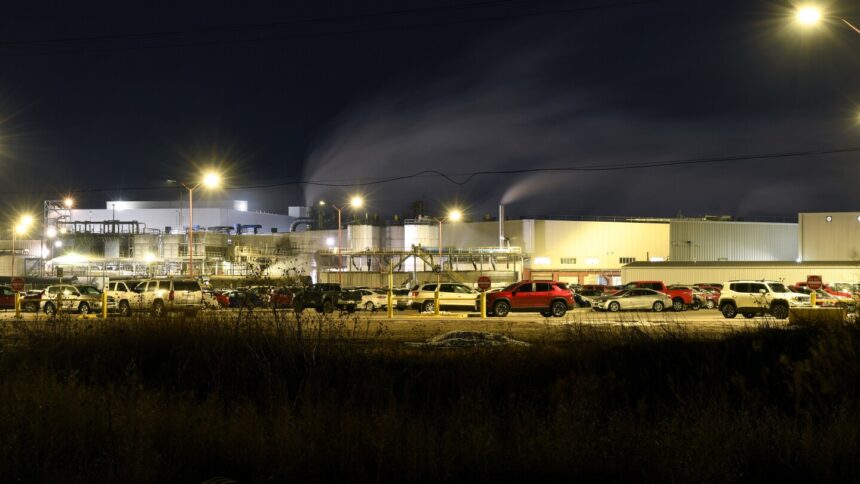
In the small town of Lexington, Nebraska, residents are bracing for a deep economic crisis as Tyson Foods announces the closure of its beef plant, set to take effect next month. The plant, a significant employer in the region, has provided jobs for approximately 3,200 workers and sustained the local economy for over three decades. The impact of this closure is expected to ripple through the town of 11,000, potentially displacing hundreds of families and causing additional layoffs in local businesses that rely on the plant’s workforce.
“We’ve heard the news, and it feels like your world closes in on you,” said Alejandra Gutierrez, a Tyson employee. Many community members, gathered in the basement of St. Ann’s Catholic Church, expressed their fears and uncertainty about the future. The layoffs, expected to total around 7,000 jobs across surrounding counties, represent a severe blow to the local economy. Workers at the plant contribute an estimated $241 million in pay and benefits annually, a sum that supports many families in Lexington.
Tyson’s decision to close the facility has been attributed to a combination of factors, including a historically low cattle herd in the U.S. and anticipated losses of $600 million for the upcoming fiscal year in their beef division. This situation has been termed by economists as a “poster child for hard times” for small towns, as it threatens not only the jobs at the plant but also the overall viability of Lexington’s economy.
As families grapple with the implications of the plant closure, many are exploring options to relocate, with some eyeing opportunities in nearby cities like Omaha or meatpacking towns in Kansas. The closure could lead to significant population declines, leaving empty seats in schools and leading to potential layoffs of teachers, impacting the very fabric of the community.
The emotional toll this news has taken is significant. Gutierrez recounted a poignant moment when she shared the news of the closure with her daughter, a high school senior considering college. “At that moment, my daughter said she no longer wanted to study,” Gutierrez recalled, revealing the anxiety surrounding financial insecurity that many families now face as they contemplate an uncertain future.
Lexington, once a place where immigrants found their footing and thrived, now stands at a crossroads. For many workers, the plant represented not just a job but a pathway to a better life—homeownership, education for their children, and a sense of community. “Tyson was our motherland,” voiced Arab Adan, a Kenyan immigrant and father, as he considered the questions his young sons posed about their future.
The community’s fabric, woven together through diverse cultures and shared experiences, is now at risk of unraveling. During recent meetings organized to aid affected workers, many faced the harsh reality of re-entering the job market with limited skills and experience outside of meatpacking. Concerns about retraining and the lack of language proficiency added to their anxiety.
Local business owners, like Armando Martinez of Los Jalapenos, a restaurant that primarily serves Tyson workers, fear for their livelihoods. “If I can’t keep up with bills, the restaurant will close,” he said, reflecting the precariousness of his situation and that of countless others who depend on the plant’s workforce.
Efforts to support displaced workers are underway, with the Nebraska Department of Labor stepping in to offer assistance during this transitional period. However, many who have dedicated decades to Tyson feel unequipped to navigate a rapidly changing job market. “It won’t be easy,” remarked Fernando Sanchez, a long-time worker, as he sat with his wife, highlighting the emotional and practical challenges ahead.
As the closure date approaches, the community rallies together, yet the future remains uncertain. While some hope for Tyson to provide a path forward—be it through repurposing the facility or relief for those impacted—others lament the impending loss of a way of life built over decades in a town that many call home. The reverberations of this closure will echo far beyond the plant itself, posing a significant challenge to resilience and community spirit in Lexington.