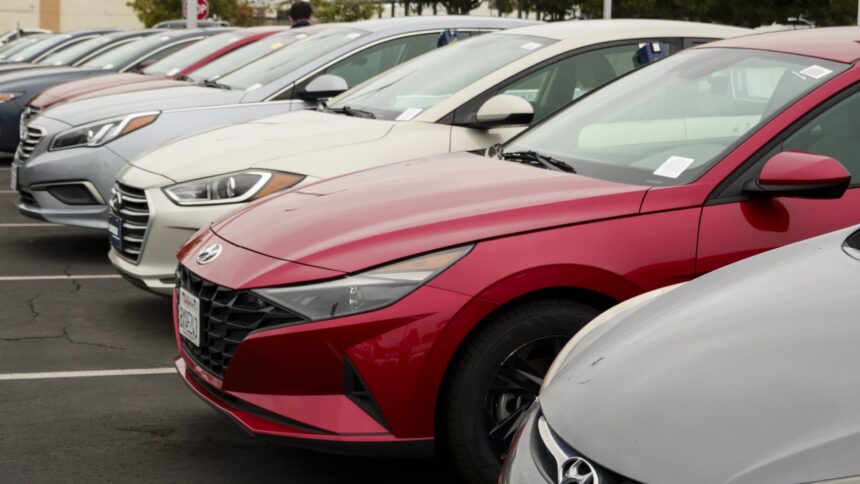
A decade ago, the automotive industry in the United States thrived, witnessing a record 17.6 million sales of cars, trucks, and SUVs. However, current forecasts indicate that this booming era may be behind us, as analysts from Bain & Company are predicting a significant downturn in vehicle sales. The consulting firm points to several key factors that could reduce the market by over 2 million units by 2040.
Mark Gottfredson, a partner at Bain & Company, described the evolving landscape of the auto market, highlighting trends such as declining birth rates, changing consumer behaviors, skyrocketing vehicle prices, and an array of alternatives, which collectively could lead automakers to compete for an increasingly shrinking customer base. Historically, the industry has relied on a consistent annual growth rate of about 1%, mirroring population increases. However, recent demographic trends reveal that population growth is slowing or even declining in some regions, transforming the automobile market from a growth sector to one in decline.
In particular, the U.S. fertility rate was reported at approximately 1.6 births per woman in 2025—significantly below the replacement rate of 2.1. While immigration has softened the impact somewhat, with an average of a million new residents annually, Bain’s projections anticipate a return to restrictive immigration policies over the next 15 years, potentially halving net migration rates to levels seen in 2019.
Consumer habits amongst younger generations have also shifted markedly. Data suggests that half of 16-year-olds today lack a driver’s license, a dramatic shift from nearly 70% of teenagers holding one from 1966 to 1984. Although many still obtain their licenses by age 25, registrations for new vehicles have declined among individuals aged 18 to 34, falling from 12% in early 2021 to less than 10% by mid-2025. In contrast, drivers aged 55 and older now account for nearly half of new vehicle registrations.
Affordability plays a critical role in these trends, with new vehicle monthly payments rising by 30% over the past four years. Today, nearly 20% of new vehicles come with a monthly price tag exceeding $1,000. Forecasting firm AutoForecast Solutions predicts that U.S. new car sales will stabilize around 16 million annually through 2033. Young consumers increasingly gravitate toward rideshare services like Uber and Lyft, reflecting their changing transportation preferences. However, those who still desire to drive face rising costs, limiting their ability to purchase new cars.
The potential arrival of robotaxis could further alter consumer dynamics, with estimates suggesting that by 2040, the percentage of licensed drivers could drop by 2 to 3 percentage points, while the number of vehicles per driver may decrease from 1.2 to 1.1. Projections indicate that this could lead to 10% to 20% of U.S. households shedding one vehicle.
The forecast shared by Gottfredson reflects adjustments made over time. Initially, he projected a dip in vehicle sales below 14 million by 2030 but revised this expectation due to slower-than-anticipated advancements in autonomous vehicles. The anticipated decline in population, especially in Europe and parts of Asia, underscores the magnitude of this challenge.
Another significant metric to watch is the rate of vehicle deregistration, which measures how many vehicles are removed from the road, either through scrapping or export. This rate has seen slight fluctuations, with a fall from about 6% in 2000 to around 5% as of 2025, with predictions suggesting it could decline to approximately 4.4% by 2040. The longevity of vehicles, now averaging 12.8 years on the road, poses questions for the industry regarding maintenance, especially concerning electric vehicle battery life and software updates.
With costs soaring, the industry may need to adapt by extending the service life of vehicles. Auto forecasters emphasize that spending significant sums on vehicles necessitates guarantees against early obsolescence.
As these trends take root, competition within the U.S. auto industry is poised to intensify, with around 450 different brands vying for consumer attention. The landscape could necessitate significant consolidation as automakers grapple with an overwhelming number of choices in an increasingly constrained market.