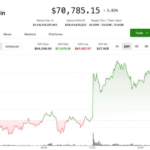
In a recent analysis, it has been revealed that U.S. spot Bitcoin exchange-traded funds (ETFs) reduced their holdings by approximately 24,000 BTC during the fourth quarter of 2025, marking a significant reversal from the accumulation trends observed in the previous year. This decline appears to correlate with weakening demand patterns among large Bitcoin holders and in the derivatives markets, reminiscent of trends observed before previous downturns.
The price of Bitcoin has fallen below its 365-day moving average, a key technical indicator that has historically been associated with the transition between bull and bear markets. According to data from CryptoQuant, Bitcoin demand has exhibited signs of fatigue in recent months, with ETF holdings declining, large investors showing a slower accumulation rate, and derivatives indicators indicating reduced interest. The analytics firm highlighted that, as of early October, Bitcoin demand has fallen below its long-term trend, a shift that traditionally signals the onset of a bear market.
Since the beginning of 2023, Bitcoin has experienced three notable demand waves driven by significant events, including the launch of U.S. spot ETFs in January 2024, the election of Donald Trump to the presidency, and what was termed a “Bitcoin treasury companies’ bubble.” However, demand growth has entered a slowdown phase, suggesting that much of the potential demand for this cycle may have already peaked, thereby exerting a bearish influence on prices.
Currently, Bitcoin is trading just above $88,000, reflecting a 30% decline from its all-time high of over $126,000, reached earlier in October. The report indicates that spot Bitcoin ETFs in the U.S. have become net sellers in the last quarter of 2025, with total holdings diminishing around $2.12 billion. This stark contrast is evident when compared to the significant increase in ETF holdings in the fourth quarter of 2024.
Moreover, there has been a notable slowdown in growth among addresses holding between 100 and 1,000 BTC, a demographic that includes ETFs and corporate treasury accounts. CryptoQuant emphasized that this segment has historically driven much of Bitcoin’s demand growth, and the current trend resembles a decline observed at the end of 2021, just ahead of the bear market that took place in 2022.
As for price projections, the report indicates that Bitcoin has now crossed below its 365-day moving average, which is considered an important technical threshold. Historically, Bitcoin downturns have followed periods of peak demand growth and subsequent declines. CryptoQuant noted the potential for a cycle low around $56,000, which would signify a 55% drop from the all-time high and a further 36% decrease from the current price. Nevertheless, it identified an “intermediate price support” level around $70,000.
This report comes in the wake of several months of declines for Bitcoin and other leading assets, including a significant $19 billion liquidation event that occurred in October. Despite these challenges, some analysts maintain a bullish outlook for Bitcoin as it approaches 2026, proposing that traditional four-year price cycles might no longer be applicable. However, firms like CryptoQuant are cautious and continue to predict further declines in Bitcoin’s future.