When Bitcoin was launched in 2009, it faced skepticism from many investors who viewed it as a fringe idea or even a scam. Charlie Munger, the long-time associate of Warren Buffett at Berkshire Hathaway, famously referred to Bitcoin as “stupid and evil.” However, the cryptocurrency has seen a significant increase in value over the years, leading high-profile figures, including former President Donald Trump, to refer to it as “digital gold.” In January, Trump signed an executive order aimed at establishing a strategic reserve of Bitcoin.
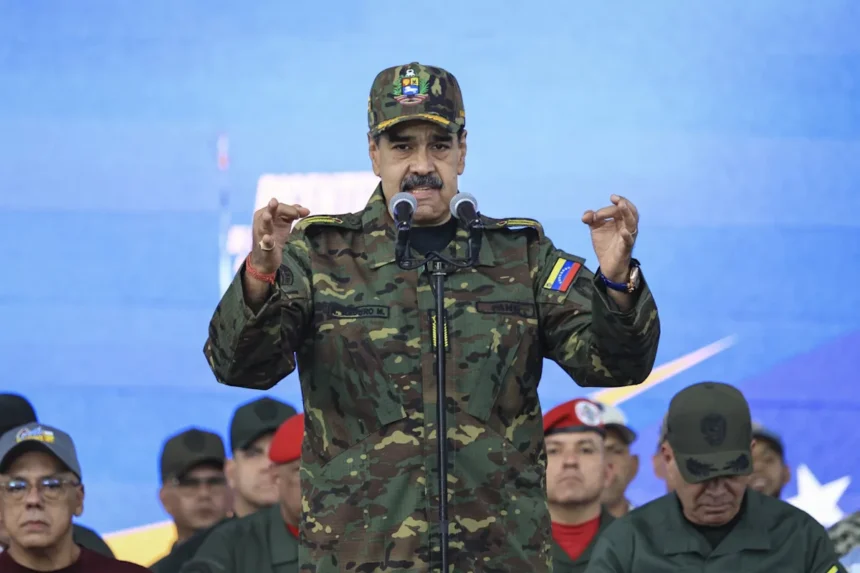
Recent reports indicate that Venezuela has reportedly embraced Bitcoin, amassing a “shadow reserve” that is said to be nearly double that of the U.S. According to digital publication Project Brazen, Venezuela might hold as much as $60 billion worth of Bitcoin. Intelligence analyses suggest that the regime of ousted President Nicolas Maduro accumulated this cryptocurrency through various means, including a gold swap managed by Interior Minister Alex Saab in 2018, oil revenues traded in Bitcoin, and the confiscation of crypto mining equipment from local miners.
Sanctions imposed on Venezuela have hindered the nation’s access to international financial systems for years. Experts believe that these economic barriers may have led the Venezuelan leadership to invest in cryptocurrencies as a form of sidestepping traditional financial constraints. Data from Bitcointreasuries.net estimates Venezuela’s Bitcoin holdings at approximately 240 Bitcoin, valued at nearly $22 million, based on information sourced from a 2022 Forbes article and blockchain analytics.
While this figure seems modest compared to the U.S. government’s estimated holdings of 328,372 Bitcoin worth around $30 billion, the claims about Venezuela’s reserves have sparked skepticism. Mauricio di Bartolomeo, co-founder of the digital asset financial services firm Ledn, has voiced doubts. Having grown up in Venezuela and with family members who have mined cryptocurrency there since 2014, di Bartolomeo finds it hard to believe the three claimed channels through which Venezuela acquired Bitcoin—gold swaps, oil exchanges, and equipment seizures—are credible. He has articulated his perspective in a Coindesk op-ed titled “Don’t hold your breath for Venezuela’s bitcoin,” noting that corruption and misappropriation of funds in the country lead him to dismiss these allegations.
Furthermore, di Bartolomeo points out that stablecoins have gained traction in Venezuela due to severe inflation, with many citizens utilizing them to send remittances that offer better exchange rates than local cash. The secretive nature of cryptocurrency complicates efforts to determine the extent of the Venezuelan government’s holdings. However, if Venezuela’s claimed reserves are indeed accurate, they could significantly impact global Bitcoin markets.
Most of the U.S. government’s cryptocurrency holdings have been accumulated through law enforcement actions. The rise of state-controlled crypto assets became prominent last year when Trump initiated plans to establish a national Bitcoin reserve to strengthen the country’s position in the digital asset landscape at no cost to taxpayers. With the U.S. effectively in control of Venezuela and Trump alluding to a potential U.S. governance role in the country, the future of any existing Bitcoin reserves remains uncertain. Regardless of the authenticity of Venezuela’s reported holdings, the ongoing dialogue reflects the increasing geopolitical importance of cryptocurrency and the U.S. administration’s readiness to advocate for its interests in the digital asset sphere.