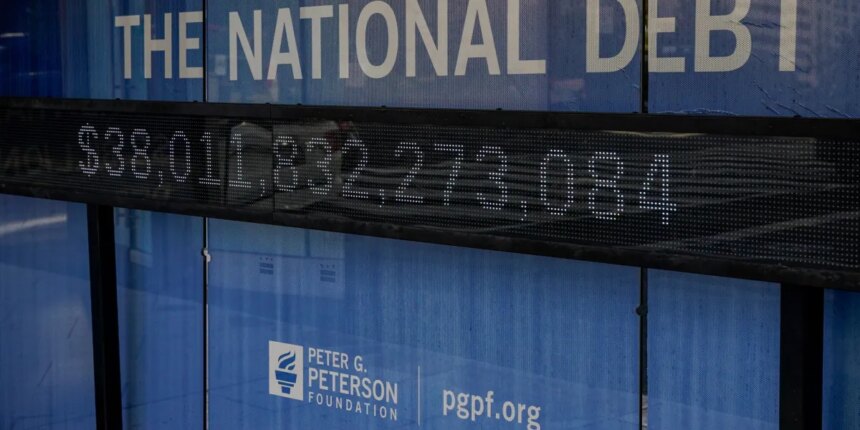
U.S. debt has reached alarming levels, with publicly held debt standing at 99% of the Gross Domestic Product (GDP) and projected to surge to 107% by 2029. This would eclipse the previous record set following World War II. The fiscal burden is already significant, with debt servicing costs exceeding $11 billion weekly, which accounts for 15% of federal expenditures in the current fiscal year.
In a recent op-ed for Project Syndicate, Harvard professor and former advisor to President Bill Clinton, Jeffrey Frankel, outlined various potential solutions to the country’s escalating debt crisis. These included options such as accelerating economic growth, reducing interest rates, defaulting on obligations, allowing inflation to erode debt value, implementing financial repression, and enacting fiscal austerity measures.
Frankel posited that while stimulating faster economic growth seems like an attractive solution, it is unlikely due to a declining labor force. Although advancements in artificial intelligence could improve productivity, they are not expected to be sufficient to significantly curb the national debt.
The professor also expressed doubt over the return to an era of historically low interest rates, labeling it an anomaly. He argued that default is an implausible strategy given growing skepticism about the reliability of Treasury bonds as a secure investment, especially after the economic implications of past tariff actions during Donald Trump’s administration.
Frankel highlighted that turning to inflation to diminish the real value of debt would be functionally akin to defaulting. Similarly, financial repression would necessitate the government compelling banks to manage bonds with unrealistically low yields. He concluded that the most viable option remaining is severe fiscal austerity, suggesting that a sustainable trajectory for U.S. debt would require deep cuts. This could mean the elimination of nearly all defense spending or virtually all non-defense discretionary expenditures.
Looking ahead, Frankel observed that it is improbable for Democrats to accept cuts to favored programs, while Republicans would likely leverage any available fiscal leeway to advocate for additional tax cuts. He warned that a future point may reach a fiscal crisis, which could be the catalyst for implementing austerity measures. The longer this reckoning is deferred, he cautioned, the more drastic the necessary adjustments will be.
Adding weight to these concerns, a report from Oxford Economics asserted that the anticipated insolvency of the Social Security and Medicare trust funds by 2034 could stir much-needed fiscal reforms. The firm suggested that legislators would aim to avert a fiscal crisis characterized by a sharp decline in demand for Treasury bonds, which would, in turn, drive interest rates higher.
Yet initially, lawmakers might pursue the easier political route, permitting Social Security and Medicare to draw from general revenues that support other government functions. However, such fiscal moves could spark a negative backlash in the bond market, which might interpret it as a failure to address pressing reforms. According to Bernard Yaros, lead U.S. economist at Oxford Economics, this situation could lead to a significant increase in the term premium for longer-duration bonds, potentially forcing Congress back into a state of reform readiness.