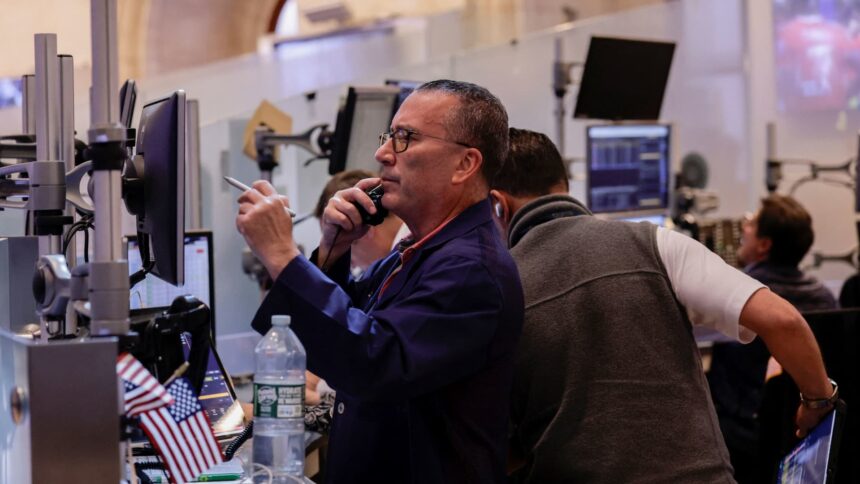
U.S. equity futures experienced a downturn while oil prices rose on Sunday, driven by ongoing tensions related to Iran and anticipation surrounding upcoming inflation data crucial for the Federal Reserve’s decision-making. The S&P 500 futures dipped by 0.4%, and the Nasdaq-100 futures fell by 0.6%. Additionally, futures linked to the Dow Jones Industrial Average decreased by 183 points, or approximately 0.4%.
Oil prices surged amid heightened uncertainty regarding the conflict in the Middle East. Specifically, U.S. West Texas Intermediate futures climbed nearly 3%, reaching around $78 per barrel, while Brent crude futures saw an increase of over 1%, settling near $81 a barrel.
These fluctuations follow President Donald Trump’s recent threats of renewed military action against Iran, demanding that the nation’s leaders “immediately stop their highly paid PROXIES in Lebanon from causing trouble.” This statement was made as Vice President JD Vance engaged in preliminary negotiations with Iranian officials in Switzerland, negotiations that had previously been postponed.
The preceding week saw a rebound in the three major U.S. indexes after a rough day of trading on Wednesday, which had been characterized by investor uncertainty regarding the future of monetary policy. A notable uptick in chip stocks facilitated this recovery, allowing the indexes to conclude the trading week on a positive note. The S&P 500 rose nearly 1% during the week, marking its 11th weekly gain out of the last 12. The Dow Jones Industrial Average similarly increased by close to 1%, while the Nasdaq Composite experienced a more robust rise of over 2%. The U.S. stock market was closed for the Juneteenth holiday on Friday.
An important focus for investors this week will be the release of the personal consumption expenditures (PCE) price index on Thursday, which is considered the Federal Reserve’s preferred measure of inflation. Economists surveyed by FactSet predict that even when excluding volatile food and energy prices, core PCE is expected to rise from April figures.
In the wake of the Federal Reserve’s hawkish stance during last week’s meeting, market expectations for a possible interest rate increase have been accelerated, with some anticipating a hike as soon as October. Consequently, market participants are keenly attentive to any inflation data that could hint at the central bank’s path forward concerning rate adjustments.
While some experts, such as Tom Lee from Fundstrat Global Advisors, identify various factors that could influence the market in the future—like task forces at the Federal Reserve and the potential supply chain disruptions from the closure of the Strait of Hormuz—the overall sentiment remains optimistic. Lee indicated on CNBC’s “Closing Bell” that while there may be a significant shift in market conditions later this year, resembling a bear market, the current conditions are still favorable for stocks.