A turbulent U.S. stock market is bracing for a pivotal moment as it encounters a potentially influential factor next week: the newly appointed Federal Reserve Chair, Kevin Warsh. With concerns mounting that interest rate hikes aimed at combating inflation might weigh heavily on equity enthusiasm, investors are keenly anticipating Warsh’s inaugural policy meeting.
Market analysts are acutely aware of the challenges that often accompany a new Fed leader, particularly in effectively communicating the bank’s strategy. Jim Baird, an investment officer with Plante Moran Financial Advisors, noted the scrutiny that Warsh will face, as the market hangs on every statement made during his first appearance.
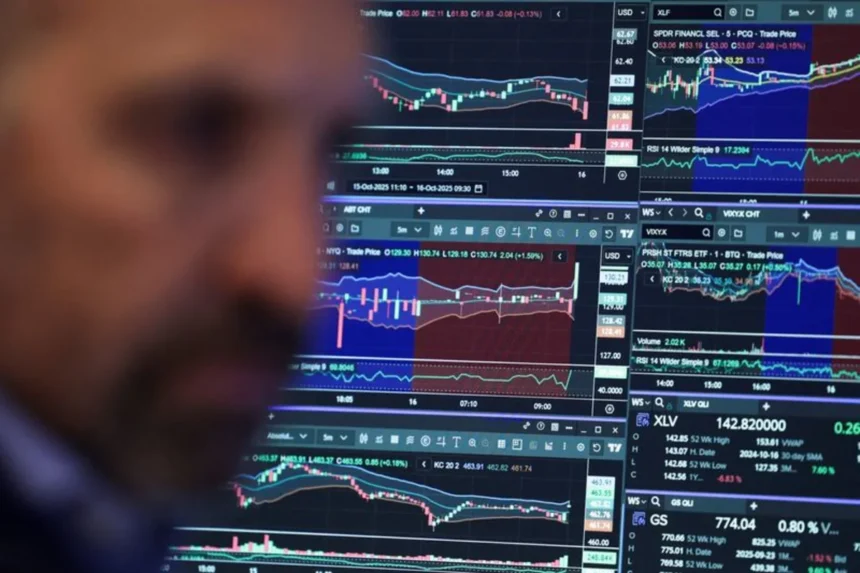
Following a series of bullish runs, major stock indexes have retraced their gains this month, with the S&P 500 currently down over 2% from its record closing high on June 2. The Nasdaq Composite has seen a more significant decline, falling roughly 4.5% from its peak on the same day. Investor sentiment has been shaky, reflected in the Cboe Volatility Index, which recently spiked to a two-month high. The major averages have experienced considerable daily fluctuations, despite posting gains on certain days.
Technology stocks, which previously led the market rally, have been at the forefront of the recent downturn. While there remains lofty optimism regarding AI-driven profits, investors are increasingly cautious about the sustainability of this rally in light of external risks, including geopolitical tensions in the Middle East and their implications for energy prices and inflation.
Additionally, investors are keeping an eye on the trading of Elon Musk’s SpaceX, which experienced a robust debut on the stock market with shares rising 19%, pushing the company’s market valuation above $2 trillion. Despite recent volatility, the S&P 500 is still up more than 8% for the year, with the Nasdaq gaining over 11%.
In terms of monetary policy, analysts suggest that the Fed is likely to maintain stability in interest rates during next week’s meeting. Any potential rate hikes could put additional pressure on equities by increasing borrowing costs for both consumers and businesses while making bonds more appealing investment options. Despite a general consensus that rates will remain unchanged, the market is keenly attuned to indicators regarding the Fed’s future direction.
Recent economic data, including consumer inflation rising at its fastest pace in three years, has heightened expectations that the Federal Reserve will prioritize managing inflation, which may foreshadow future rate hikes. Marvin Loh, a senior global macro strategist at State Street, commented on the importance of deciphering the new administration’s reaction function at the Fed and hinted that a more hawkish outlook could catch the market off guard.
During the upcoming meeting, Fed officials are anticipated to provide insights into interest rate projections and economic outlooks, with particular attention on Warsh’s communication style post-policy announcement. Analysts are eager to see how he articulates the Fed’s stance on inflation and whether he conveys intentions to reshape the central bank’s approach.
Warsh’s prior comments about potentially reducing the Fed’s $6.7 trillion balance sheet could also evoke market implications. Observers speculate he may revise the Fed’s communication strategy, indicating a shift to a more data-dependent framework. Jeff Given, head of developed-market fixed income at Manulife Investment Management, noted that if the Fed opts for greater discretion, economic indicators could garner increased scrutiny, introducing additional volatility into the markets.
As investors prepare for this crucial week, all eyes are on the Fed and its new leadership to provide clarity on the path ahead.