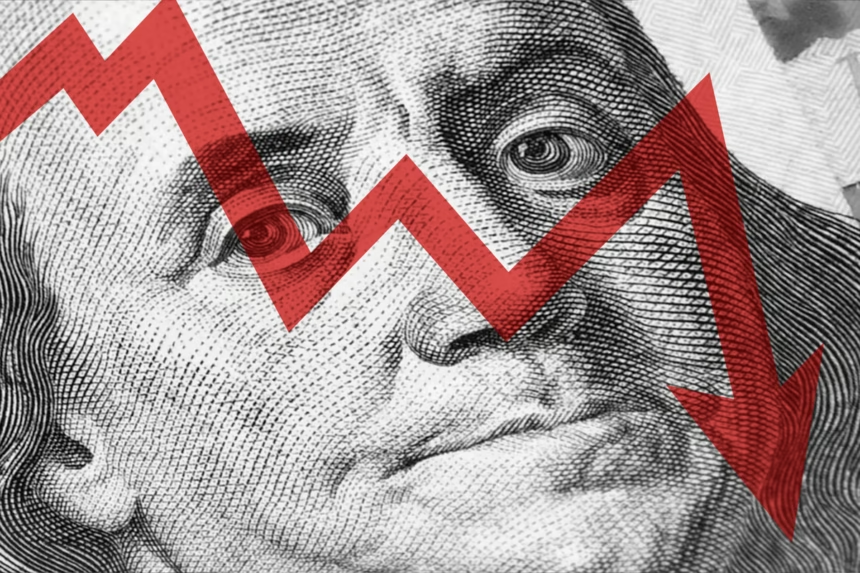
The U.S. stock market is experiencing a remarkable surge, with the S&P 500 advancing 16% since March and achieving a streak of nine consecutive weeks of gains. Meanwhile, the Nasdaq Composite has seen a staggering 25% increase—its largest two-month gain since 2002. However, this upward trajectory is met with growing concerns regarding the health of the market, especially as Treasury yields spiked in May in response to persistent inflation, which may force the Federal Reserve to consider interest rate hikes.
Investors are bracing themselves for potential rate increases, with forecasts suggesting an uptick of at least 25 basis points within the next year. The higher borrowing costs associated with increased rates typically exert pressure on corporate earnings, ultimately slowing down economic growth. Furthermore, elevated interest rates can diminish stock market valuations, making equities less attractive compared to safer investments like government bonds.
Inflation remains a critical issue, with the Consumer Price Index (CPI) indicating a 3.8% year-over-year increase in April—marking the hottest inflation reading since May 2023. Core CPI, which strips out volatile food and energy prices, has also shown an uptick, signaling that rising energy costs are having a broader impact across various sectors of the economy. Despite a retreat in oil prices last month spurred by reports of a preliminary ceasefire agreement between the U.S. and Iran, Brent crude prices remain elevated, trading above $90 a barrel—over 50% higher than at the start of the year. This situation leaves consumers feeling the squeeze as inflationary pressures could persist for months, particularly given the challenges associated with restoring oil infrastructure in the Persian Gulf.
The correlation between interest rates and stock valuations has been articulated by investment legend Warren Buffett, who pointed out that lower interest rates enhance the present value of future earnings, while higher rates have the opposite effect. For example, if projected profits total $100 five years from now, an interest rate of 3% would necessitate an investment of approximately $86 today to achieve that target. Conversely, a 5% rate would drop this requirement to around $78, demonstrating how rising rates devalue future earnings.
Amidst the stock market’s recent rally, the 30-year Treasury yield has reached 5.18%, the highest level since 2007, remaining above 5% for an extended period—11 consecutive trading days. Historical data suggests that when the 30-year yield has previously surpassed this threshold for similar durations, the S&P 500 and Nasdaq Composite faced subsequent declines of 17% and 14%, respectively, over the following year.
As the stock market continues to rise, fueled partly by diminishing tensions in the Middle East, the allure of Treasury bonds is becoming more pronounced in light of increasing yields. If these elevated rates persist, investors may reconsider their allocations, potentially leading to capital outflows from equities and dragging the major market indices down. The interplay between rising interest rates, inflationary trends, and investor sentiment will be pivotal in determining the market’s direction in the coming months.