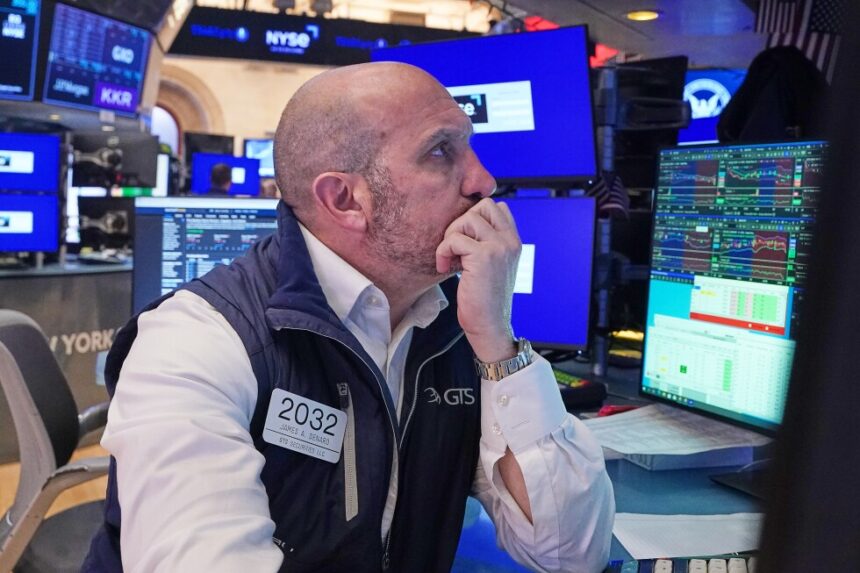
The U.S. stock market is poised for another record-setting day as major companies like GE Vernova and Boston Scientific report profits exceeding analysts’ expectations. As of Wednesday afternoon, the S&P 500 index rose by 0.9%, aiming to surpass its previous all-time high set on Friday. The Dow Jones Industrial Average increased by 317 points, or 0.7%, while the Nasdaq climbed by 1.3%.
Notably, GE Vernova surged 12.1% after posting impressive profits in the first quarter, driven by increased demand for its products that generate about a quarter of the world’s electricity. The company reported $2.4 billion in equipment orders for data centers during the quarter, significantly surpassing its total for the previous year. This performance allows GE Vernova to raise its financial forecasts for the remainder of the year, marking a significant benefit from the growing field of artificial intelligence.
Boston Scientific also contributed positively to the market, rallying 8.6%, while Boeing and Philip Morris International saw increases of 5.7% and 6.9%, respectively, all based on stronger-than-expected quarterly results.
Despite the positive corporate earnings, caution lingers among investors due to rising oil prices, which are influenced by ongoing uncertainties surrounding the war with Iran. Brent crude oil prices increased by 3.6%, reaching $102.04 a barrel. The conflict has affected shipping traffic through the Strait of Hormuz, a vital waterway for oil tankers, as tensions escalate between the U.S. and Iran. Iran has recently taken aggressive actions in the strait, raising concerns about the future availability of oil supply from the region.
The broader implications of the conflict were highlighted when U.S. President Donald Trump announced the extension of a ceasefire while maintaining an American blockade of Iranian ports, further complicating prospects for dialogue to resolve the situation.
In a volatile market, Brent crude prices have fluctuated significantly, having risen from approximately $70 per barrel prior to the outbreak of conflict. Recent market behavior indicates a more subdued response to oil and stock movements, especially in light of earlier dramatic swings causing the S&P 500 to drop nearly 10% below its last all-time record.
On the downside, Best Buy saw a 5.2% decrease in its stock value following the news of CEO Corie Barry’s departure, with plans for her replacement already in place.
Meanwhile, the cannabis sector experienced a boost after reports suggested that the Trump administration may be considering reclassifying marijuana as a less dangerous substance. This potential change, while not legalizing recreational use, could alleviate regulatory pressures and taxes on the industry. Tilray Brands soared by 14.8%, and Canopy Growth spiked 17.9% in response to this news.
In international markets, Europe saw a decline in index values following a mixed performance in Asia. In contrast, the Japanese Nikkei 225 edged up by 0.4%, while Hong Kong’s Hang Seng dropped by 1.2%. The bond market displayed stability with Treasury yields easing, as the yield on the 10-year Treasury remained steady at 4.30%, despite the gains in oil prices. This development occurred after comments from Trump’s nominee for chair of the Federal Reserve, Kevin Warsh, who clarified that he had not committed to cutting interest rates amid Trump’s calls for lower rates.