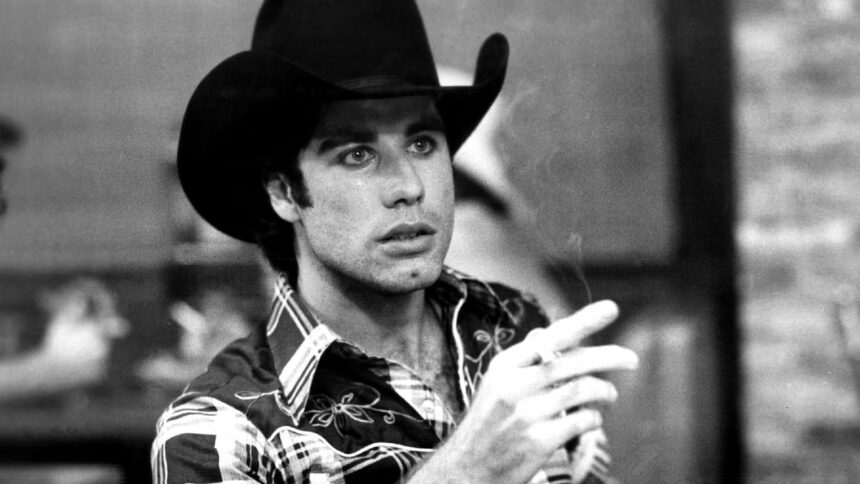
In the midst of a cinematic renaissance in the 1970s, John Travolta emerged as a Hollywood sensation, solidifying his status as a leading man through various romantic dramas. Initially recognized for iconic films like “Saturday Night Fever” and “Grease,” Travolta’s versatility would soon unfold, with his performance in the 1980 film “Urban Cowboy” establishing a turning point in his career.
Despite its niche fanbase, “Urban Cowboy” remains one of Travolta’s more underrated works in the realm of romantic dramas. The film not only became a box office success but also showcased Travolta’s evolution as an actor, appealing to a wider audience and demonstrating deeper emotional and thematic complexity. Alongside Debra Winger in one of her early roles, the film captures the tumultuous love story between two young Texans, Bud and Sissy, set against the backdrop of Houston’s vibrant yet challenging environment.
The narrative delves into themes of authenticity within the cowboy culture of the American Southwest, embodied by Bud, who leaves his rural roots in search of a better life. As the film unfolds, it becomes a rich exploration of relationships, laden with obstacles and toxic dynamics. While many might view it as just another romance, “Urban Cowboy” digs deep into the complexities of love, challenging perceptions of true companionship.
Director James Bridges captures not just a romance but paints a vivid portrait of Texas life, weaving in cultural traditions such as bull-riding and country dancing. The film stands as a contemporary interpretation of the Western genre, subverting expectations and providing a revisionist perspective. Bud’s journey, marked by rivalry with the brash Wes Hightower—a supposed “real cowboy”—serves as a backdrop for his personal growth and the evolution of his love for Sissy.
As Bud competes for Sissy’s affection and contends with his own flaws, the film culminates in a dramatic resolution transcending the typical cowboy showdown. The transformation of both Bud and Wes throughout the narrative enriches the story, enabling it to question what it means to be a “real” partner.
Beyond “Urban Cowboy,” Travolta’s career has seen numerous highs and lows, revealing his struggle against typecasting. Directors like Brian De Palma and Quentin Tarantino recognized his versatility, culminating in a significant resurgence with “Pulp Fiction” in 1994. Despite a varied filmography, “Urban Cowboy” remains a standout, serving as both a reflection of 1980s cinema and an exploration of romantic and cultural themes that resonate even today. The film not only highlights Travolta’s charm but also solidifies his place as a nuanced actor capable of navigating complex narratives.