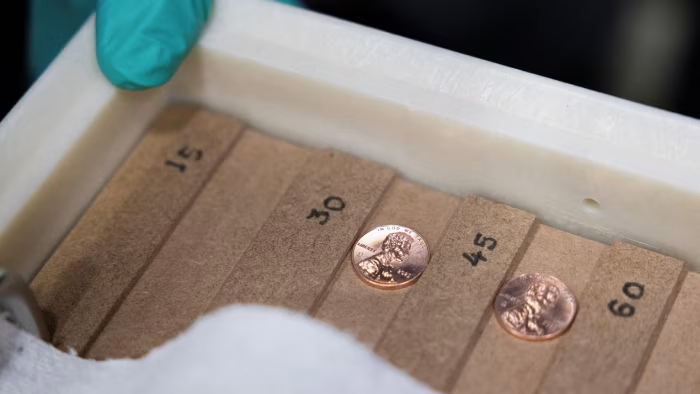
The recent cessation of penny production marks a significant shift in the U.S. monetary landscape, highlighting broader discussions regarding the future of cash in a rapidly evolving economy. The last one-cent coins rolled off the production line this week, bringing an end to the issuance of a denomination that has been in circulation for 232 years.
The decision to stop minting pennies was made in February, driven by economic considerations. President Donald Trump noted that the cost of producing a penny is almost three times its face value, prompting debates about practicality in fiat currency systems. While similar criticisms could be directed at the nickel, the crux of the issue lies in the diminishing purchasing power of smaller denominations.
This transition echoes global trends, with several countries having already phased out their lowest denominations. For instance, Canada halted penny production in 2012, and Australia did so even earlier, with minimal disruption following their respective changes. Back when the United Kingdom ceased minting halfpennies in 1984, similar concerns about the declining utility of low-value coins emerged, questioning the rationale behind producing currency that has little to no worth in everyday transactions.
The usage patterns of cash are evolving too. Recent statistics released by the Federal Reserve indicate that cash transactions among U.S. consumers have halved, now accounting for only 16 percent of all transactions in the past eight years. This trend has implications for various socio-economic groups, particularly those who rely on cash for daily transactions. Importantly, individuals from lower-income brackets tend to utilize cash and small denominations more frequently, benefiting from the tangible nature of physical money for budgeting purposes.
Cultural perspectives on cash usage vary widely. In the Eurozone, approximately half of point-of-sale transactions were made in cash last year, according to the Dutch central bank. While only a minority of Dutch citizens expressed that cash usage was crucial, nearly half of people in Germany maintained that access to cash remains important.
The COVID-19 pandemic accelerated these discussions, introducing a new generation of consumers wary of handling physical currency due to hygiene concerns. The demand for cash surged in the early days of the pandemic, with many seeking it as a reliable store of value amidst economic uncertainty.
Though the American penny may gradually fade into obscurity—its legal tender status unaffected by the halt in minting—it serves as a reminder of the changing dynamics in monetary policy and consumer behavior. As societies grapple with the future of cash, the fate of smaller denominations like the penny will continue to inform debates on economic resilience and accessibility.