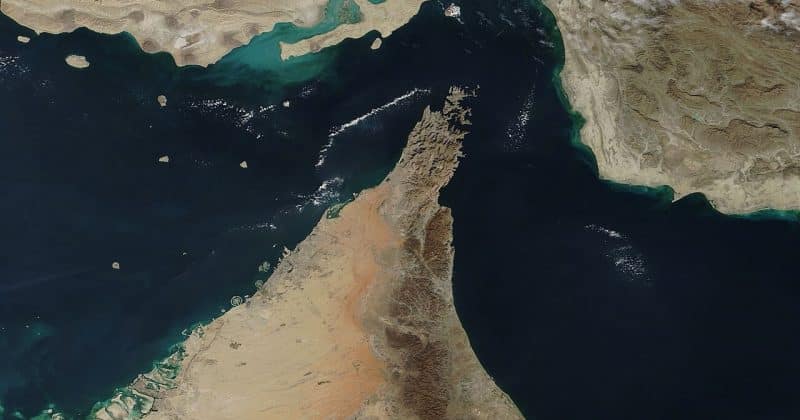
US Central Command confirmed on June 12 that American forces intercepted multiple Iranian one-way attack drones that were targeting maritime traffic near the Strait of Hormuz. This defensive maneuver aimed to safeguard commercial shipping routes, which are crucial to global trade, particularly in oil. The incident has sent ripples through financial markets, leading to a significant selloff in the cryptocurrency sector.
Bitcoin fell sharply to a six-week low, dropping below $73,000 as traders rushed to liquidate their positions. The market experienced a wave of liquidations that exceeded $1 billion, leaving leveraged traders notably exposed in the aftermath of this escalation.
The Strait of Hormuz, recognized as the world’s most important oil chokepoint, sees approximately 20% of the global oil trade transit through its narrow passage. Official reports confirmed that at least two drones were downed, although some sources indicated the number could be higher. These drones are classified as one-way attack systems, specifically designed to crash into their targets without the capability of return.
This incident is part of a broader pattern of escalating military activity in the region; the US has intensified its military presence since February 28, when it launched a more comprehensive aerial campaign. Throughout May, US forces took further action by downing four Iranian drones and targeting radar installations, marking a worrying trend of escalating tensions rather than a de-escalation, especially as US-Iran negotiations for a ceasefire continue to face roadblocks.
The implications of these developments extended into the cryptocurrency market, with Bitcoin’s decline illustrating more than a mere reaction to the downed drones. Rather, it underscored fears surrounding the unraveling of diplomatic efforts in a region critical to global energy prices.
The $1 billion-plus in liquidations highlight a recurring theme in crypto trading, where higher leverage can amplify losses during unforeseen geopolitical incidents. Many traders found themselves caught off guard, as the drone shootdowns represented an unpredictable variable not captured by typical technical analyses.
Interestingly, the connection between Iran and cryptocurrency runs deeper. Iran has been investigating Bitcoin-based alternatives to mitigate the sanctions that affect shipping in the Strait of Hormuz. This makes the asset’s decline due to Iranian conflicts particularly ironic, as it is also viewed by Iran as a tool to navigate through such geopolitical challenges.
Investors looking for lessons in these turbulent times can reflect on previous patterns, particularly those observed back in May when the market initially reacted to similar military provocations. Typically, after a hard selloff, markets tend to stabilize and then partially recover once the immediate threats seem to diminish.
For traders and investors, the recent market turbulence serves as a crucial reminder regarding the risks associated with leverage in highly volatile geopolitical situations. Position sizing becomes paramount, particularly when geopolitical events can cause rapid price fluctuations in digital assets like Bitcoin.