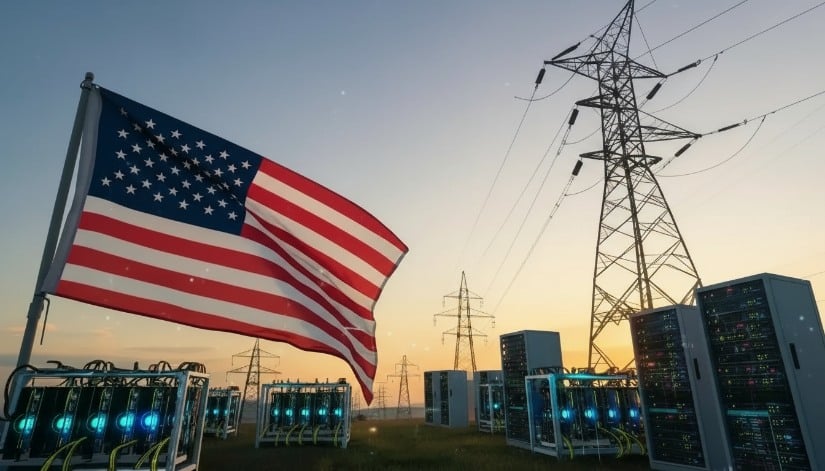
The U.S. government is initiating significant reforms aimed at expediting the process for AI data centers and Bitcoin mining companies to connect to the power grid. Energy Secretary Chris Wright addressed federal regulators on October 23, 2025, advocating for the establishment of new rules designed to shorten connection times from several years to approximately 60 days.
This initiative targets the burgeoning demand for electricity from energy-intensive tech companies, including AI and cryptocurrency mining entities. As the demand for electricity surges—reportedly growing at the fastest rate in two decades—the implications of this proposal could reshape energy access across the nation.
Wright’s letter to the Federal Energy Regulatory Commission (FERC) emphasizes the need for standardized procedures that would allow large electricity users, defined as those requiring more than 20 megawatts, to directly connect to high-voltage transmission lines. This level of power is sufficient to supply thousands of homes. The proposed framework includes 13 key principles, requiring companies to fund their own network upgrades but allowing for expedited approval of their connections.
Wright asserted that this approach falls within FERC’s legal jurisdiction and serves the public interest, urging the commission to respond to his proposal by April 30, 2026.
The timing of this proposal is crucial, as electricity demand in the U.S. is skyrocketing. In 2023, data centers consumed about 4.4% of the nation’s electricity, a figure that could rise to between 6.7% and 12% by 2028. Furthermore, total electricity consumption by data centers has increased dramatically from 58 terawatt-hours in 2014 to 176 terawatt-hours in 2023, with projections suggesting an alarming rise to between 325 and 580 terawatt-hours by 2028, primarily driven by advancements in artificial intelligence.
Wright noted that the escalation in U.S. electricity demand is expected to occur at an extraordinary pace due to the integration of large facilities with the electrical grid. Current regulations pose significant hurdles, often causing delays of several years for new connections, while speculative “phantom” data center projects further congest the approval pipeline.
If approved, the new regulations could also benefit Bitcoin mining operations, which require substantial energy to power the computers necessary for transaction validation within the blockchain network. S. Matthew Schultz, CEO of CleanSpark, described the proposal as a positive signal recognizing the potential of flexible power users to assist in stabilizing the grid. He highlighted the adaptability of mining operations, which can quickly scale electricity usage to help meet demand peaks.
As of now, U.S. Bitcoin miners manage over 5 gigawatts of power capacity, with an additional 6 gigawatts in development. Enhanced access to transmission lines could allow them to utilize cheaper electricity, particularly from regions rich in renewable energy.
The proposal aligns with a broader pro-cryptocurrency strategy pursued by the Trump administration. In January 2025, Trump signed an executive order supporting digital assets and established a working group aimed at developing regulatory frameworks for cryptocurrencies, viewing Bitcoin mining as a dual opportunity for economic growth and efficient power utilization.
However, the proposal faces criticism. Environmental advocates express concerns regarding the potential increase in carbon emissions linked to energy-intensive operations gaining easier grid access. Critics, such as Camden Weber from the Center for Biological Diversity, warn about FERC potentially approving connections too hastily. Additionally, skepticism exists regarding FERC’s authority over large-user connections, traditionally managed at the state level, and the implications for consumer electricity costs.
The competition between AI firms and Bitcoin miners for limited electricity resources is becoming increasingly fierce. Both sectors require massive energy, and they seek locations near cost-effective and sustainable power options. Analysts from JPMorgan underscore the urgency for Bitcoin miners to secure partnerships with AI companies, suggesting the window may close within nine months.
Some mining companies are already reaping the rewards, with Core Scientific experiencing a 272% stock price increase after securing contracts with AI infrastructure provider CoreWeave—a strategic move geared to position itself favorably in this rapidly evolving landscape.
With U.S. power demand from data centers projected to reach 84 gigawatts by 2030, the question remains whether the electrical grid can sustain this growth and efficiently manage the distribution of resources.
Wright’s proposal sets a pressing six-month timetable for FERC to react. The commission, currently comprised of a 3-2 Republican majority following recent confirmations, may lean towards a more business-friendly approach. The outcome of FERC’s decision will play a crucial role in determining the U.S.’s capacity to maintain its leadership in both AI technology and cryptocurrency mining amidst growing electrical grid demands.