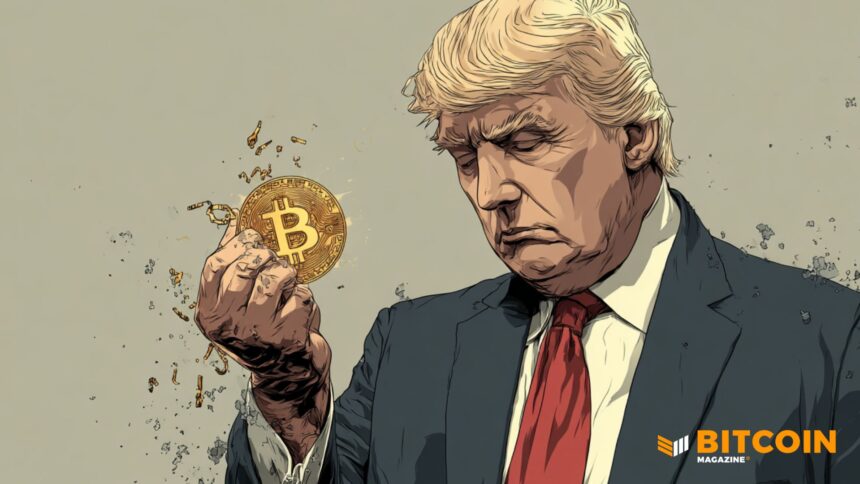
The U.S. Marshals Service (USMS) has reportedly sold approximately $6.3 million in bitcoin that developers of the Samourai Wallet, Keonne Rodriguez and William Lonergan Hill, forfeited as part of their guilty plea to the U.S. Department of Justice (DOJ). This action raises concerns that it could violate Executive Order (EO) 14233, which stipulates that bitcoin acquired through criminal or civil asset forfeiture should be retained as part of the United States’ Strategy Bitcoin Reserve (SBR).
Documents obtained exclusively by Bitcoin Magazine, including an “Asset Liquidation Agreement,” indicate that the bitcoin, valued at $6,367,139.69 at the time of transfer, was sent directly to Coinbase Prime rather than being maintained in USMS custody. This could suggest that the bitcoin was sold without adhering to the mandate that requires such assets to be held within the SBR, highlighting a possible divergence from federal guidelines.
Executive Order 14233 explicitly states that bitcoin acquired through criminal forfeiture, referred to as “Government BTC,” should not be sold and is meant to be contributed to the U.S. SBR. If the USMS did proceed with the sale, it implies a departure from the legal framework guiding the treatment of these digital assets. Certain members of the DOJ may still regard bitcoin as a risky asset that should be liquidated rather than viewed as a key strategic asset aligned with executive directives.
The legal underpinnings of the forfeiture stem from 18 U.S. Code § 982(a)(1), which mandates forfeiture of property involved in offenses related to unlicensed money transmission. Under this statute, the Samourai developers’ bitcoin qualifies as “Government BTC.” Crucially, neither § 982 nor its associated laws require that forfeited property be liquidated. The statutes governing forfeiture proceeds do not necessitate converting these digital assets to cash but allow for their retention in kind.
The Southern District of New York (SDNY), which oversaw the prosecution of Rodriguez and Hill, has previously been noted for acting independently from federal directives. This instance seems to fit a broader pattern of the SDNY disregarding federal guidance on cryptocurrency prosecution, especially given the Trump administration’s intentions to curtail aggressive regulation against noncustodial crypto services. In an earlier memo, Deputy Attorney General Todd Blanche emphasized that the DOJ would no longer pursue charges against virtual currency exchanges or related services for the actions of their users. However, SDNY’s actions indicate a continuation of prosecutorial priorities counter to this guidance.
Moreover, as the legal team for Rodriguez and Hill uncovered potential supportive evidence from high-ranking officials at the Financial Crimes Enforcement Network (FinCEN) suggesting that Samourai Wallet may not constitute a money transmitter, the SDNY opted to proceed with the case.
The backdrop of persistent low acquittal rates in federal criminal cases, along with the reputation of the presiding judge for imposing strict sentences, likely weighed heavily in the developers’ decision to plead guilty. This has prompted questions among Bitcoin supporters about the future of the current administration’s stance on cryptocurrency regulation, especially in light of President Trump’s remarks indicating a potential pardon for Rodriguez.
The culmination of these events has far-reaching implications for both the crypto community and regulatory approaches moving forward. The concerns raised about the legality of the USMS’s actions could spotlight a need for clarity and compliance with existing executive mandates regarding digital asset management, specifically as supporters of the industry await decisive steps from the administration to align DOJ practices with the strategic goals outlined by EO 14233.