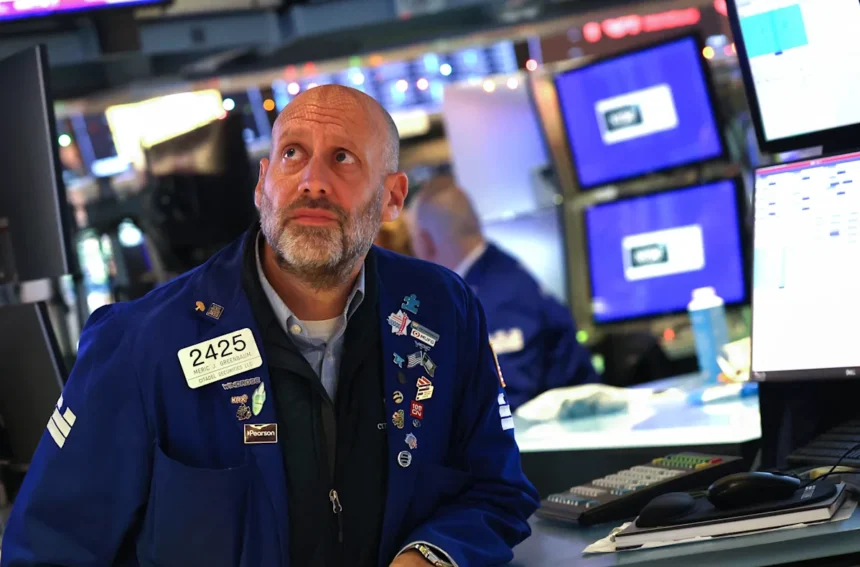
US stocks experienced a downturn on Monday, with the S&P 500 and the Dow Jones Industrial Average falling by nearly 0.2% and 0.1%, respectively. The tech-heavy Nasdaq Composite faced a sharper decline of 0.5%, following a significant drop the previous Friday. Investor sentiment has been cautiously subdued as they await a series of economic reports that could impact expectations for interest-rate cuts in 2026.
A wave of apprehension regarding inflated expectations of artificial intelligence (AI) has prompted investors to shift their focus away from tech stocks toward value stocks, contributing to the pressures faced by the Nasdaq and S&P indices. The Dow, however, has suffered less due to its limited exposure to tech equities. Many market strategists consider this rotation a healthy sign, indicating a widening base of support for stocks beyond the dominant tech leadership, potentially allowing other sectors to rise as the AI sector wanes.
As the final full trading week of 2025 begins, optimism from Wall Street about the stock market’s prospects in the new year persists. Analysts speculate that former President Trump’s influence on a reconfigured Federal Reserve and his proposed “One, Big, Beautiful Bill” may yield favorable monetary and fiscal policies, beneficial for corporate earnings. Significant economic data is due for release this week, potentially shaping market expectations regarding future Federal Reserve easing. Key reports include the monthly jobs report on Tuesday and an inflation statistic on Thursday, relevant for November, along with an update on October retail sales, critical in discussions about the Fed’s interest rate strategy.
The imminent transition of Fed Chair Jerome Powell has added a layer of speculation, with Trump hinting at a preference for Kevin Hassett or Kevin Warsh for the position. Hassett noted that while Trump’s insights would be factored into decision-making, the Fed would maintain independence in determining rates.
In corporate developments, iRobot experienced a dramatic plunge in its stock price, which fell around 70% after filing for bankruptcy. The company, known for its Roomba vacuum cleaners, has faced significant challenges amid fierce competition from more affordable Chinese alternatives and the implications of Trump’s tariff policies.
While concerns around AI have pressured tech stocks, UBS strategists have indicated that there is no evidence of an AI investment bubble. They expect continued growth in global AI capital expenditures, suggesting that the ongoing race towards artificial general intelligence could lead to significant capital expenditure cycles that are distinct from immediate monetization prospects.
In the cryptocurrency space, Bitcoin saw a decline of over 3%, settling around $86,000, as skepticism about the potential for a trend reversal remained prevalent. After hitting highs near $94,000, Bitcoin’s performance has been lackluster, currently down 8% for the year. Analysts caution that Bitcoin may remain in a consolidation phase, trading between $80,000 and $100,000, rather than experiencing a strong bullish trend.
Market reactions were mixed, with Tesla shares reaching an all-time high of $479.86 before falling slightly. The company’s increase came after reports highlighted advancements in its autonomous driving technology. Conversely, other major tech stocks had a tougher day, reflecting the ongoing volatility within that sector.
Zillow’s share price dropped nearly 11% amid a report indicating that Google is testing a new advertising format in real estate that could undermine its market presence. This decline is part of a more extensive struggle for Zillow, which has seen its shares drop more than 9% this year.
In a broader context, the markets are navigating through a backlog of economic data following the recent government shutdown, which has further complicated the forecast for the Federal Reserve’s next moves and the overall trajectory of the economy.