The cryptocurrency industry, historically defined by its opposition to traditional finance, is witnessing a significant convergence between the two realms. A notable example of this trend is Variational, a startup that has crafted a decentralized derivatives trading protocol aimed specifically at attracting liquidity from traditional finance dealers rather than merely relying on niche crypto firms. The founders of Variational are confident that their blockchain-based platform has the potential to rival established players in the derivatives market.
The appeal of this approach has caught the attention of investors, as evidenced by Variational’s successful $50 million Series A funding round announced recently. This round, led by Dragonfly Capital, also included participation from Bain Capital Crypto and Coinbase Ventures. Notably, Bain Capital Crypto had previously led a $10.3 million seed round for Variational, which was completed in 2021 but only highlighted to the public in 2024.
Based in the Cayman Islands, Variational seeks to penetrate a competitive market where “real-world assets,” such as oil and commodities, can be traded globally with the efficiency of blockchain technology. In this landscape, Singapore-based Hyperliquid has emerged as a preferred venue for weekend commodity trading. Unlike many existing crypto exchanges, which typically function through order books that connect buyers to sellers, Variational adopts a different strategy. It aggregates liquidity from various existing venues, including larger crypto exchanges and traditional finance dealers, to enhance market depth.
Lucas Schuermann, co-founder and CEO of Variational, discussed the limitations of current order book models, emphasizing that they suffer from a “cold start problem.” This issue arises because these systems do not port liquidity over but must rebuild it from scratch. He noted that even the most liquid assets on platforms like Hyperliquid experience a vast disparity in liquidity when compared to traditional finance sources such as trading on the Chicago Mercantile Exchange (CME).
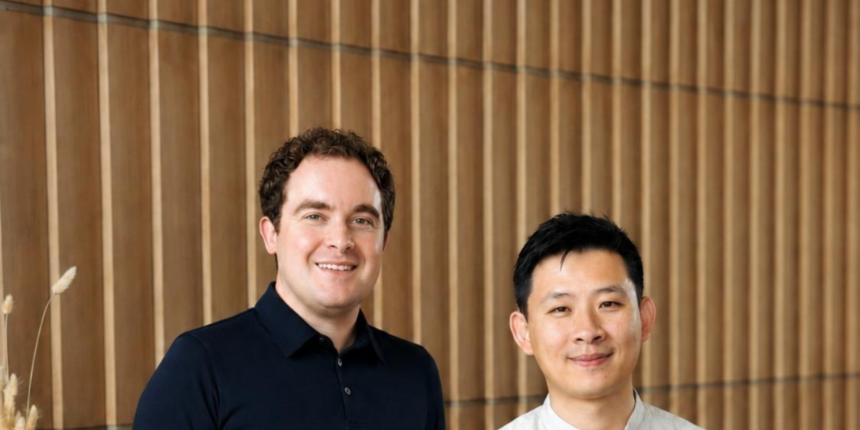
The partnership between Schuermann and fellow co-founder Edward Yu began during their freshman year at Columbia University, where they were placed in neighboring dorm rooms. Their entrepreneurial journey led them to establish a quantitative trading firm, which was subsequently acquired by Barry Silbert’s Digital Currency Group. After departing in 2021, they founded Variational, which now boasts a team of 24 employees.
In assessing their competitive landscape, Variational finds itself frequently compared to Hyperliquid, the current frontrunner in crypto trading. Both platforms facilitate retail-focused applications for trading perpetual futures—contracts that do not have an expiration date—and both began their operations on Ethereum-based blockchain Arbitrum. Variational’s trading app, known as Omni, features an Omni Liquidity Provider (OLP) that acts as a counterparty to user trades.
However, Variational’s founders are keen to clarify that they do not view Hyperliquid or traditional exchanges as direct competitors. Instead, Schuermann explained that Variational operates more like a brokerage and likens its zero-fee trading model to that of Robinhood, emphasizing its collaborative reliance on existing exchanges.
Looking ahead, Variational aims to transition its Omni platform from its current invite-only model to a public offering in select jurisdictions. The company plans to expand its liquidity partnerships for real-world assets and increase the number of tradeable assets available on its platform. Schuermann expressed optimism that Omni’s robust liquidity will facilitate a transformative moment for retail trading of real-world assets.