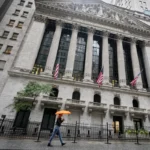
Wall Street witnessed a dramatic reversal on Thursday as initial optimism quickly shifted to disappointment, marking what could be dubbed a “Reckoning Day” for investors.
As the market opened, traders were hopeful, buoyed by Nvidia’s robust earnings report released Wednesday evening. This news initially alleviated fears surrounding a potential downturn in artificial intelligence demand. Additionally, a morning jobs report indicated an unexpected rise in the unemployment rate, suggesting that the U.S. economy shed jobs in August for the second time in three months. This development led to widespread speculation that the Federal Reserve might consider lowering interest rates in December to boost the labor market.
At first glance, this combination of factors caused a surge in all three major stock indexes. The Dow Jones Industrial Average soared by more than 700 points in the early hours. However, by midday, this joy evaporated, sending the market into a tailspin as traders grappled with fresh uncertainties regarding Nvidia’s growth potential and the likelihood of a rate cut by the Fed.
Michael Block, a market strategist at Third Seven Capital, captured the confusion, stating that investors were struggling to reconcile Nvidia’s outstanding performance with the challenge of sustaining such growth amidst a fluctuating economic landscape. Ultimately, the day’s gains faded as it became clear that the optimistic signals did not provide the clarity investors were hoping for.
By the end of trading, the mood had changed dramatically. The S&P 500 fell by 1.6%, and the Nasdaq dropped over 2%. The Dow experienced its most significant fluctuation in months, swinging 1,100 points before closing nearly 400 points lower. Nvidia, which had seen a brief spike of 5%, ended the day down 3%. Bitcoin, initially rallying above $92,000, slipped to around $86,000, marking another point of concern for investors.
Heading into Friday, futures pointed toward a continuation of this downward trend, with the S&P 500 and Nasdaq expecting slight declines and Nvidia looking at an opening drop of an additional 2%. Bitcoin’s woes deepened, dipping another 5% to nearly $80,000, its lowest level since April, and appeared set for its most challenging month since 2022.
The optimism sparked by Nvidia’s earnings seemed to morph into anxiety as investors questioned if the company could maintain its explosive growth in the face of a maturing AI market. Furthermore, the jobs report, which at first seemed to signal positive economic indicators, revealed deeper complexities upon further examination. The perception that the labor market was recovering was complicated by the rising unemployment rate, which could be attributed to an influx of individuals returning to the workforce rather than an actual decrease in job quality.
Compounding these uncertainties, the minutes from the Federal Reserve’s last meeting suggested considerable hesitance within the institution toward any rate cuts in the near future. This environment of ambiguity resulted in CNN’s Fear and Greed Index settling into “extreme fear” territory, reaching its lowest point since April. The VIX volatility index surged to its highest level since the onset of recent turbulence.
Going forward, market analysts caution that until investors receive clear answers regarding AI demand and economic conditions, volatility will likely persist. With important government data delayed due to a shutdown and the conclusion of the earnings season, clarity may not arrive in time for a stable transition into the holiday trading period.