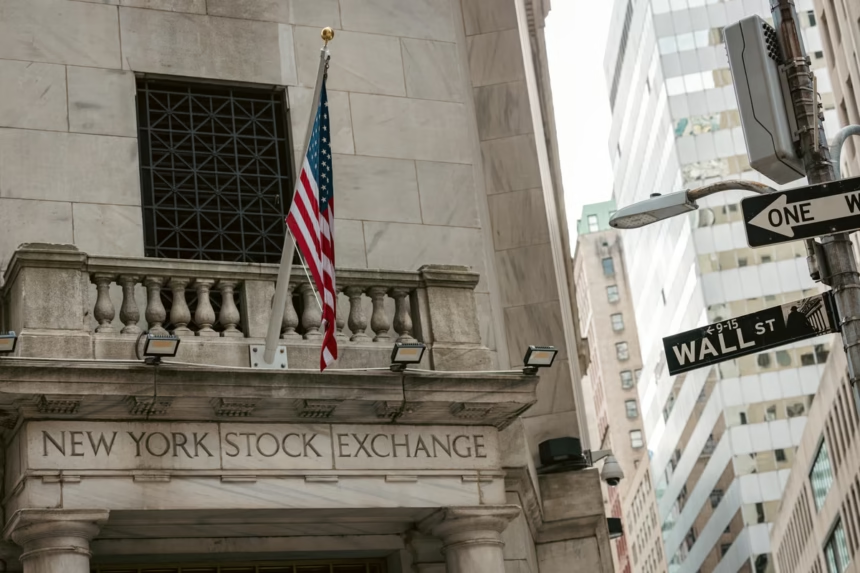
Wall Street is exhibiting resilience in the face of geopolitical tensions, with both the S&P 500 and the Dow Jones Industrial Average gaining traction on Tuesday. Investor sentiment, while still fragile, is buoyed as Brent crude futures surged past $101 following Israeli airstrikes that reportedly resulted in the death of Iran’s security chief, Ali Larijani. This development has instigated volatility in energy markets, prompting concerns of further escalation in the region. Meanwhile, equity investors are keeping a close eye on President Trump’s attempts to forge a naval coalition aimed at reopening the Strait of Hormuz. Despite the positive indices, market analysts caution that signs of a weakening labor market coupled with sustained high energy costs pose significant risks to broader economic growth.
In a move set to intensify its competition with Walmart, Amazon has revealed the launch of one-hour and three-hour delivery options across more than 2,000 cities and towns in the U.S. This ambitious rollout targets high-frequency items, such as electronics and everyday essentials, featuring a new fee structure that may represent a shift from Amazon’s traditional delivery model. Prime members will incur a $9.99 surcharge for one-hour delivery, and $4.99 for three-hour delivery. This strategy not only aims to increase shopping frequency but also seeks to monetize ultra-fast fulfillment capabilities, countering Walmart’s expanding Express Delivery network. Amazon is employing predictive AI technology to enhance its logistics efficiency, pre-positioning inventory in smaller urban facilities to meet the tight delivery timelines.
Additionally, Nvidia has reported a 1.6% rise in its stock after showcasing advancements at the GPU Technology Conference, including details on self-driving car technology through collaboration with Uber. The anticipated launch of an autonomous fleet is set for 2027, with Los Angeles and San Francisco marked as initial testing grounds. The company also introduced NemoClaw, a new AI software platform enhancing security and privacy controls for users as it approaches the broader AI marketplace.
In the realm of law enforcement, Cellebrite launched a new AI investigative platform called Genesis, designed to expedite digital investigations. By converting investigative tasks that previously took weeks into mere minutes, Genesis aims to bolster the capabilities of resource-strapped agencies working on complex cases, including those involving narcotics and human trafficking.
On the automotive front, Tesla has made significant moves by partnering with South Korea’s LG Energy Solution to build a $4.3 billion lithium iron phosphate battery factory in Lansing, Michigan. This factory aims to produce essential components for Tesla’s utility-scale storage systems, allowing the company to establish a domestic supply chain and mitigate reliance on international battery production. This strategic pivot aligns with Tesla’s agenda to enhance energy storage capabilities, which have seen substantial year-over-year growth.
Additionally, Rocket Companies reported strong financials, driven by lower interest rates and a surge in loan volume. Their recent acquisitions and partnerships are ahead of schedule, positioning Rocket strongly for a favorable spring season in the mortgage space.
As markets prepare for the day’s trading, stock futures for the S&P 500 and Nasdaq are retreating amidst concerns over the Federal Reserve’s policy decisions. Despite Nvidia’s optimistic projections, a potential interest rate hold by the Fed has instilled caution among traders worried about the implications of rising energy prices on inflation and economic forecasts.