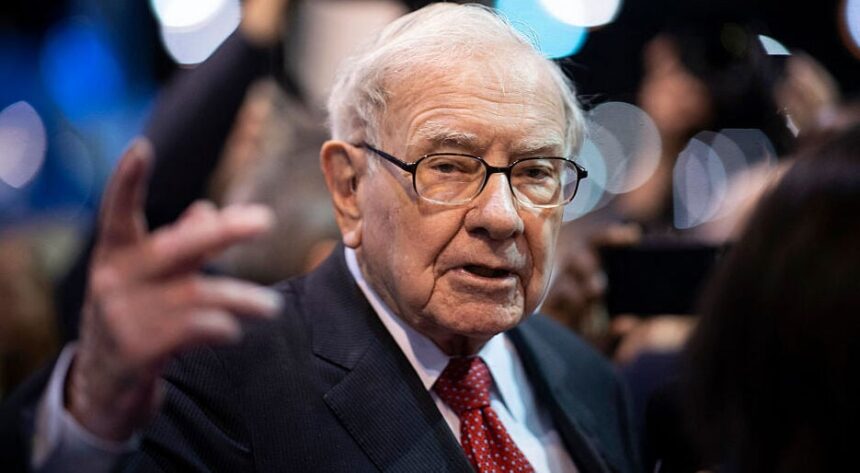
Warren Buffett, renowned as one of the most successful investors globally, has recently forecasted a significant downturn for the U.S. economy, suggesting that a remarkable economic phase would conclude in 2023. During the 2023 annual meeting of Berkshire Hathaway, Buffett indicated that lower earnings were anticipated across the majority of the company’s businesses compared to the previous year. This cautionary stance marks a notable departure from his historically bullish outlook on the U.S. economy, especially amid ongoing struggles with inflation, rising interest rates, and a persistent banking crisis.
Buffett’s concerns resonate with his late business partner Charlie Munger’s advice to “get used to making less.” Despite these warnings, the S&P 500 index has seen striking gains, increasing more than 70% since the beginning of 2023. This indicates that while Buffett anticipated challenges, many of America’s largest companies have continued to grow in size and influence. The “Warren Buffett Indicator,” which measures the ratio of the U.S. stock market to GDP, has now exceeded 230%. Buffett has previously cautioned that a ratio approaching 200% raises significant concerns, indicating that stock valuations are increasing much faster than the economy itself.
As we look toward 2026, questions arise about the validity of Buffett’s predictions regarding the economy. Despite his alarming outlook, recent analyses highlight a shift in Wall Street’s sentiment from anxiety to optimism. Key motivators for this trend include advancements in technology, particularly artificial intelligence, which have revitalized investor confidence.
Notably, the economic landscape shows signs of strain, demonstrated by slowing job growth and rising unemployment—both traditionally concerning indicators. Yet, the tech industry, buoyed by companies like Nvidia, Microsoft, and Meta, shows no signs of slowing down, prompting a wave of enthusiasm in the stock market. However, market strategists caution that the current surge in tech stocks could be symptomatic of an emerging bubble, underscoring the necessity for investors to maintain diversified portfolios across various sectors.
For those looking to broaden their investment horizons, international markets may offer promising alternatives. The Toronto Stock Exchange, for example, has posted double-digit growth led by its energy sector, which contrasts sharply with the tech-driven U.S. market.
Digital investing platforms like Robinhood are making it easier for investors to explore a wide range of global stocks, enabling access to over 650 international securities through American Depository Receipts (ADRs). This user-friendly approach allows individuals to initiate investments without significant capital requirements.
Moreover, exploring alternative assets can provide a safeguard against market volatility. Real estate, traditionally viewed as a stable investment that can hedge against inflation, is now more accessible through platforms like Mogul, which offers fractional ownership in premium rental properties without the burdens typically associated with property management.
Similarly, platforms like Arrived allow individuals to purchase shares in rental properties, earning dividends without managing real estate directly. This democratization of real estate investment is reshaping how everyday investors can build wealth.
As industry leaders caution about potential drawdowns in equities over the next couple of years, diversifying investment strategies becomes increasingly vital. Notably, significant figures like Jeff Bezos and Bill Gates balance their stock investments with alternatives, such as art, which has consistently outperformed traditional equities while providing unique diversification benefits.
Buffett’s prescient concerns might indeed materialize as the stock market naturally experiences cycles of growth and contraction. Historical data reveals that remaining invested over long periods yields significantly better returns than attempting to time the market. Strategies like micro-investing through apps such as Acorns also provide innovative ways to build wealth, allowing consumers to invest spare change effortlessly.
In summary, while Buffett’s warnings may serve as a reality check for many investors, they highlight the importance of diversification and proactive investment strategies in an evolving economic landscape. As market fluctuations are inevitable, adapting to these changes will be crucial for future financial success.