This year has been remarkable for Wall Street, and Australian investors are reaping the rewards through their superannuation funds. The S&P 500 index recently crossed the 7,600 mark for the first time, significantly up from its all-time low of 2,100 a decade ago and a mere 4,200 five years prior. Australia’s stock market has mirrored this upward trend, although it has experienced some recent volatility.
One academic has suggested that Wall Street and global markets have entered a state of “bliss,” characterized by consistently rising gains. This concept hinges on the belief that governments and central banks are unlikely to allow major corporations to fail, largely due to the substantial economic repercussions such failures could trigger. Historical events, such as the 1929 stock market crash leading to the Great Depression and the 1987 crash contributing to the Australian recession of 1992, underline the potential dangers of market collapses. Notably, the 1987 Black Monday saw about $500 billion wiped off the New York Stock Exchange.
Should this “bliss” theory hold true, some analysts argue it could render stock markets into a one-way bet, greatly diminishing the risk of a market crash. However, others contest the viability of this notion, raising concerns about a moral hazard that has taken root following government bailouts during the global financial crisis. The Troubled Asset Relief Program (TARP) was implemented to stabilize major banks burdened with bad assets. While Lehman Brothers fell, this incident gave rise to the idea that certain financial institutions are “too big to fail,” which can skew risk perceptions among executives who may bet recklessly, believing they would be rescued if things went south.
Gemma Dale, director of nabtrade, pointed out that this kind of investment bravado has been present for decades. The assurance provided by government actions during tumultuous times has fostered a culture of confidence among traders and investors. This lack of apprehension is problematic, Dale contended, as it can erode ethical standards in corporate behavior.
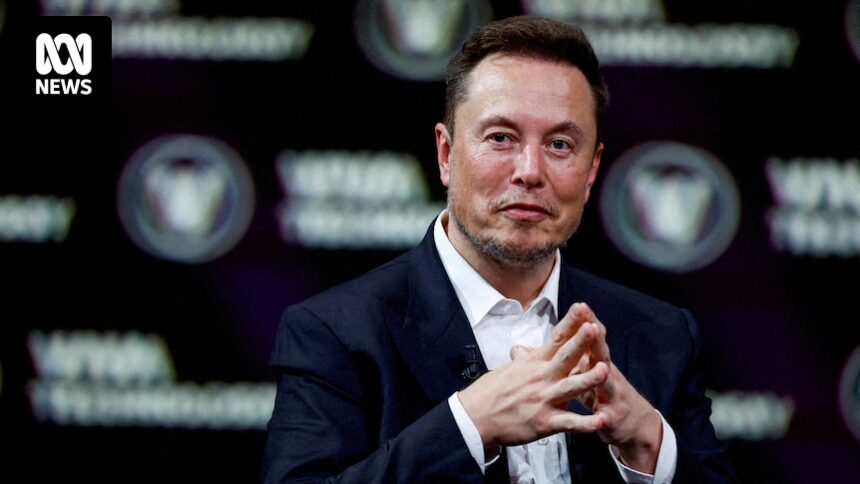
In part, this attitude has propelled mega IPOs, as evidenced by SpaceX’s record-breaking debut on the stock market. Australians with superannuation managed by major funds may find themselves unwittingly backing Elon Musk’s ventures. Despite skepticism surrounding SpaceX’s profitability and ambitious targets, the company’s listing price of $135 has been deemed inflated by experts, who value it at closer to half that figure. Other massive IPOs are anticipated as tech giants like Amazon, Meta, Alphabet, and Nvidia continue to grow rapidly, signaling a shift where these firms invest heavily in new ventures but tempering expectations of immediate profitability.
Investor sentiment was notably buoyant recently, with billions funneled into semiconductor stocks despite overarching global uncertainties, such as escalating tensions in Iran and the looming threat of rising U.S. interest rates. Analysts have pointed out that even the flimsiest news can trigger substantial inflows into the stock market, further fueled by the perceived safety net of government support.
An existential question arises: Are today’s stock markets effectively risk-free? If the current paradigm continues, the likelihood of a crash—a scenario where major stock indices fall by 40-50%—could seem unlikely. Yet, as feared by others like investor Ray Dalio, there may be underlying vulnerabilities that could surface at any time.
Concerns have also been articulated regarding the pressurized U.S. bond market, where the yield on the 10-year Treasury bond recently hit a two-year high of 4.6%, a threshold posing risks for stock valuations. Rising yields often signal increased investor unease, which can have dire consequences for equity markets.
Dale noted that the moral hazard created by prolonged government support might foster complacency among investors. As companies relying on indices receive automatic purchases from mutual funds, this self-perpetuating cycle could exacerbate vulnerabilities. The furor around central bank backing brings into question whether investors are truly engaging with risk or skirting its reality.
Dale warned that should a significant economic shock occur—removing prominent companies from key indices—a market downturn could unfold rapidly. The simplicity of believing that large corporations will always be propped up becomes dangerous if widespread withdrawal occurs from the market.
In the context of ongoing speculation and uncertainty, many Australian superannuation holders are currently witnessing the benefits of this once-untouchable market. However, the prolonged upward trajectory comes with its own set of risks, making the future less predictable than it may appear.