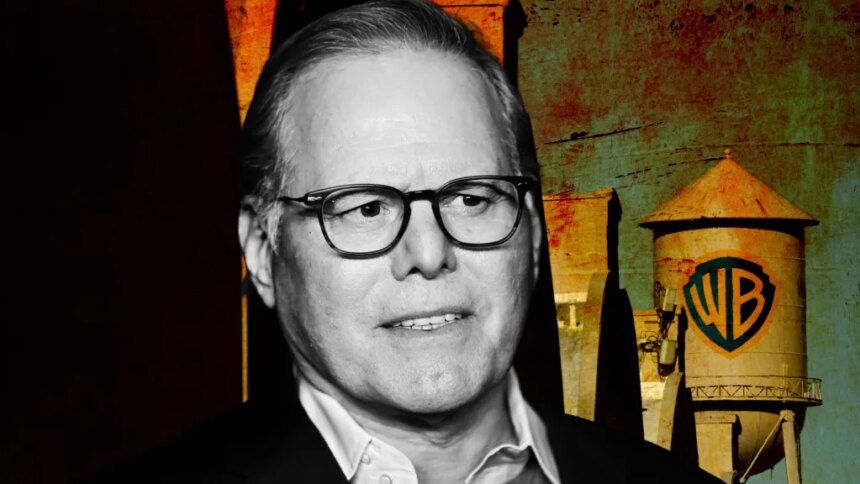
In a town hall meeting held on Friday, Warner Bros. Discovery (WBD) CEO David Zaslav attempted to reassure employees following the abrupt collapse of negotiations with Netflix. Just two and a half months ago, Zaslav had been optimistic while announcing a potential deal with the streaming giant during a December town hall. However, the mood on this particular occasion was notably different, marked by the employees’ disappointment over Netflix’s decision to withdraw from the deal after WBD pursued a more lucrative offer from Paramount.
The Zoom meeting, lasting just over 20 minutes, was characterized by a somber atmosphere as staff grappled with the implications of this surprising shift in strategy. One staff member described the general sentiment as “really bad,” encapsulating the widespread discontent among employees who were left reeling from the news.
Zaslav commenced the meeting with a bold declaration that WBD remains “the envy of all of the industry,” accompanied by Chief Revenue and Strategy Officer Bruce Campbell and CFO Gunnar Wiedenfels. They detailed how WBD had captivated Paramount’s interest, noting a dramatic increase in the bid from $19 to $31 per share. Despite their attempts to clarify the details of the acquisition, the executives expressed surprise at the rapid development of events, with Zaslav himself referring to the experience as “whiplashy.”
However, reactions to Zaslav’s tone were mixed; one employee remarked that the trio’s demeanor seemed “tenuous and timid.” According to reports, Zaslav’s assertions that prospective buyers recognize the value of WBD “because of all of you” appeared to ring hollow for many, especially as the recent layoffs—a source of anxiety among staff—were mentioned as contributing factors to the company’s improved financial performance.
With the looming prospect of a merger with Paramount, employees voiced concerns over potential job losses similar to those seen under new leadership at Paramount. A source indicated that “people are scared,” reflecting a palpable tension regarding the future of their positions within the organization.
Discussion about the performance of Warner Bros. movie and TV studios, as well as HBO and HBO Max, yielded conflicting interpretations of Zaslav’s statements. Some attendees found his remarks about “turning the company around” grating, while others noted more credit was given to individual teams and their contributions to rebuilding the company’s streaming platform.
CFO Wiedenfels reportedly appeared shaken during the call, reflecting a stark contrast to his previous standing at a December town hall, where he was poised to lead a potential spinoff company with Netflix. Now, he finds himself navigating the complexities of a potential merger with Paramount, stirring apprehensions about the future direction of CNN, which would be included under Paramount’s management.
As the town hall unfolded, it became evident that employees felt disconnected from upper management’s narrative. Despite the customary practice of soliciting questions from staff, none were taken during the session, leading to a collective sense of disbelief and frustration among attendees. “People could not believe they took no questions from employees,” one source said, highlighting a growing sentiment of detachment from leadership.
Overall, the meeting left participants feeling disheartened and bewildered, leading to characterizations of the session as “cringeworthy.” With the lack of feedback and engagement from leadership and the lack of an open forum for employee concerns, many left the zoom call feeling a mixture of shock and dissatisfaction.