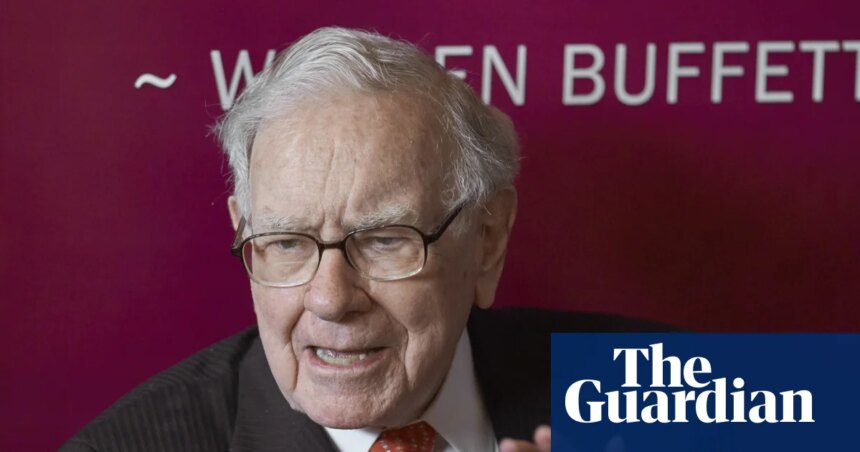
Warren Buffett, the legendary investor known for his thorough and insightful communication with shareholders, has announced plans to retire by the end of 2025. His annual letters to investors have served not only as updates on Berkshire Hathaway’s performance but also as a platform for sharing his investment wisdom and keen observations. Since taking over the company in 1965, Buffett has transformed it from a struggling textile manufacturer with $25 million in shareholder equity into a sprawling business empire now valued at over $1 trillion.
One of the more candid reflections in his recent communication involved his admission that he initially viewed his acquisition of Berkshire Hathaway as a mistake, attributing it to the impending decline of the textile business. This sparked a discussion on capital allocation. Buffett emphasized that understanding the future potential of acquisitions is essential, underscoring that true value comes from purchasing 100% of strong, well-managed companies at reasonable prices, a challenge he described as “extraordinarily difficult.”
A significant lesson learned during his investment journey has been the importance of paying cash rather than offering shares in acquisitions. This wisdom emerged after the costly decision to use Berkshire shares to acquire General Re in 1998, which he characterized as “a terrible mistake” that resulted in shareholders receiving far less value in return.
Buffett is also known for articulating a unique investment strategy that employs a dual approach—investing in outstanding publicly traded companies while also seeking to acquire entire businesses. He noted the advantages of this eclectic strategy, drawing an analogy to Woody Allen’s humorous observation about a “bisexual” approach, suggesting it maximizes opportunities.
In a memorable quote from 1986, Buffett captured the essence of market psychology: to be fearful when others are greedy and greedy only when others are fearful. He acknowledged that while significant investment opportunities may become rare, the underlying dynamics of fear and greed remain constant.
His skepticism extends to acquisitions. Buffett has often pointed out that many deals endanger shareholder value and is perplexed by why buyers depend on projections from sellers. He once commented on the “biological bias” that leads many CEOs to act impulsively when surrounded by encouragement, comparing it to a young man’s quest for validation rather than prudent decision-making.
A standout aspect of Buffett’s success has been Berkshire’s insurance business, particularly Geico. The ability to leverage premium float—money held until claims are made—has been instrumental in funding investments. He recalls how Hurricane Andrew in 1992 tested the industry, resulting in losses that exposed vulnerabilities among insurers while reinforcing Berkshire’s robust position.
Buffett has consistently warned against the dangers of derivatives, labeling them as “financial weapons of mass destruction.” This foresight was illustrated during the 2008 financial crisis, where the interdependence among large financial institutions contributed to widespread failures. He noted that the management of risks surrounding derivatives requires not just awareness of one’s own situation but an understanding of the broader system.
Looking ahead, Buffett’s strategy focuses on maintaining liquidity to capitalize on market downturns, describing it as being ready to “rush outdoors carrying washtubs, not teaspoons” when opportunities arise. He emphasizes a long-term vision that prioritizes flexibility in investment.
Leadership at Berkshire Hathaway has been characterized by a centralized approach to financial decisions, complemented by a significant delegation to strong managers overseeing various units. Buffett has often praised the skill and tenacity of senior leaders like Rose Blumkin, whose remarkable career exemplifies the kind of talent he values.
As he ponders succession, Buffett has consistently assured shareholders that the board is prepared for life post-Buffett, identifying several candidates capable of stepping into leadership roles. While he has humorously dismissed the idea of managing the portfolio beyond his lifetime, he has prepared Berkshire for a future beyond his own influence, ensuring its principles endure.
Buffett’s departure will mark the end of an era, but his insights into investing, capital management, and corporate governance will likely continue to guide investors long after he steps down.