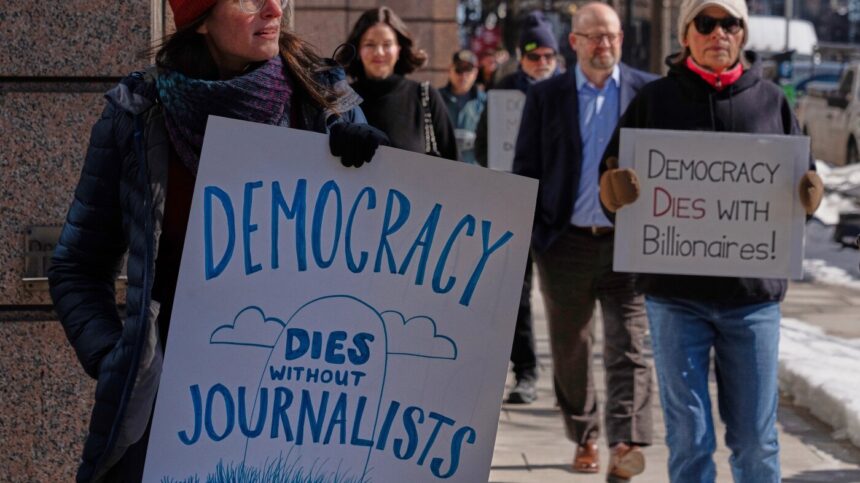
The recent resignation of Will Lewis as Publisher and Chief Executive of the Washington Post marks a significant moment in the paper’s tumultuous trajectory over the past two years. Lewis, who took the helm in 2024, stepped down amidst widespread turmoil that saw substantial layoffs within the newsroom, which has been struggling with significant financial losses.
In a resignation note, Lewis characterized his tenure as a period of “two years of transformation,” although many observers see it as more characterized by turbulence and crisis than innovation. His departure follows a brutal round of job cuts that occurred just days prior, which saw more than a third of the newsroom let go amid ongoing financial challenges. The layoffs were a continuation of a trend that had seen the newspaper’s annual losses ballooning to tens of millions of dollars, with reports citing a peak loss of $100 million.
Lewis’s leadership has faced significant scrutiny, with staff members expressing growing disillusionment over his management style and the direction of the paper. At a turbulent all-staff meeting just five months into his tenure, Lewis confessed to the grim financial situation, a discussion that ultimately proved to be his last public engagement with employees.
Compounding the situation was his notable absence during critical moments. As the layoffs were announced during a mandatory Zoom call for the newsroom, Lewis was reportedly nowhere to be seen, a decision that left many staff members feeling abandoned. Furthermore, he did not address the concerns of the paper’s readers, effectively ignoring a broader audience worried about the publication’s future.
Adding insult to injury, mere hours after the layoffs were announced, Lewis was photographed attending the NFL Honors event in San Francisco, a move criticized by many as tone-deaf in light of the recent upheaval within the organization. The lack of communication and engagement from Lewis prompted journalists within the paper to appeal directly to Jeff Bezos, the owner of the Washington Post, imploring him to intervene and stabilize the paper’s operations. However, those appeals went unanswered.
The layoffs severely impacted various departments within the Post, leading to the dissolution of the sports desk and the drastic reduction of the local staff from more than 40 to around a dozen reporters. The international desk was also significantly affected, with entire teams being eliminated; notably, the Middle East team, including a bureau chief and another war correspondent who learned of her termination while stationed in a conflict zone.
Following Lewis’s resignation, Jeff D’Onofrio, the paper’s chief financial officer, has stepped in as acting CEO, taking on the enormous task of rebuilding not only the staff but also restoring confidence in the beleaguered newspaper. As the Washington Post navigates this challenging period, many will be watching to see if renewed leadership can yield a clearer and more stable path forward.