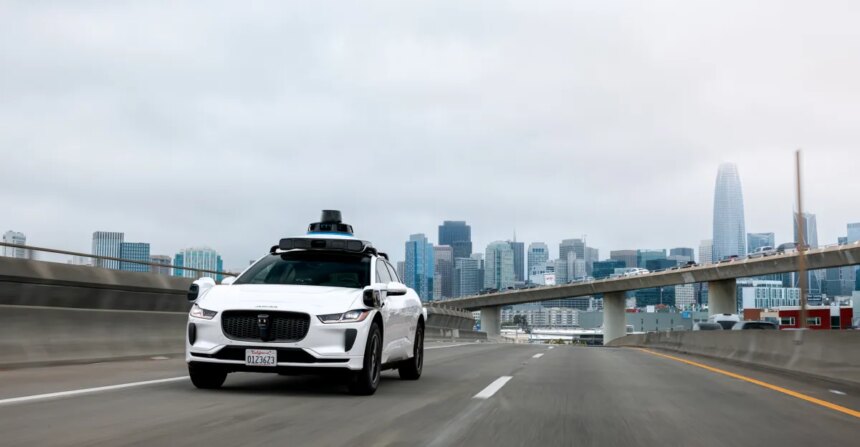
On Thursday, Waymo customers were taken by surprise when they opened the app to find that freeway services were no longer available. Trips that typically would have been completed quickly on the freeway were suddenly expected to take significantly longer as the routes shifted to local streets.
Waymo later confirmed the suspension of freeway driving across all U.S. markets due to concerns related to construction zones. Additionally, the company halted its services in Atlanta and San Antonio because of ongoing issues with flooded roads. These developments arrive shortly after several of Waymo’s robotaxis were seen navigating through flooded areas in Texas at higher-than-normal speeds, which prompted the company to issue a software recall for its entire fleet.
These recent suspensions come at a critical time for Waymo, which has been aggressively expanding into new markets with the aim of reaching 1 million paid rides per week, a significant increase from its current volume of around 500,000 rides. The company is also on the verge of introducing a new vehicle, the Ojai electric van built by Zeekr, which will showcase its sixth-generation autonomous driving software.
In a statement, Waymo spokesperson Chris Pappas explained that the decision to suspend freeway driving was driven by concerns regarding construction zones, although he did not provide specific details on the issues the vehicles were encountering. Pappas emphasized the company’s commitment to being a responsible participant in local communities, stating, “As part of that commitment, we make proactive decisions including temporarily pausing aspects of our service. We know riders count on us to get around, and we appreciate their patience as we work to get them where they’re going safely and reliably.”
Highway travel is crucial for Waymo as it aids in reducing trip durations and allows access to economically significant routes, such as those leading to airports. The company has positioned freeway driving as a vital feature in its strategy to scale operations and effectively compete with traditional ridesharing services like Uber and Lyft. Currently, freeway trips were available only in select cities, including San Francisco, Los Angeles, Phoenix, and Miami.
This pause is part of a troubling trend of incidents for Waymo, which, despite its advancements in enhancing road safety and reducing traffic incidents, continues to experience its share of operational challenges. In recent news, a neighborhood in Atlanta faced congestion caused by numerous empty Waymo vehicles, leading to a traffic jam in a cul-de-sac. There was also an incident in Dallas where a Waymo vehicle was filmed running a red light at a busy intersection.
At this time, there has been no indication provided as to when Waymo will resume freeway driving or offer services again in Atlanta and San Antonio.