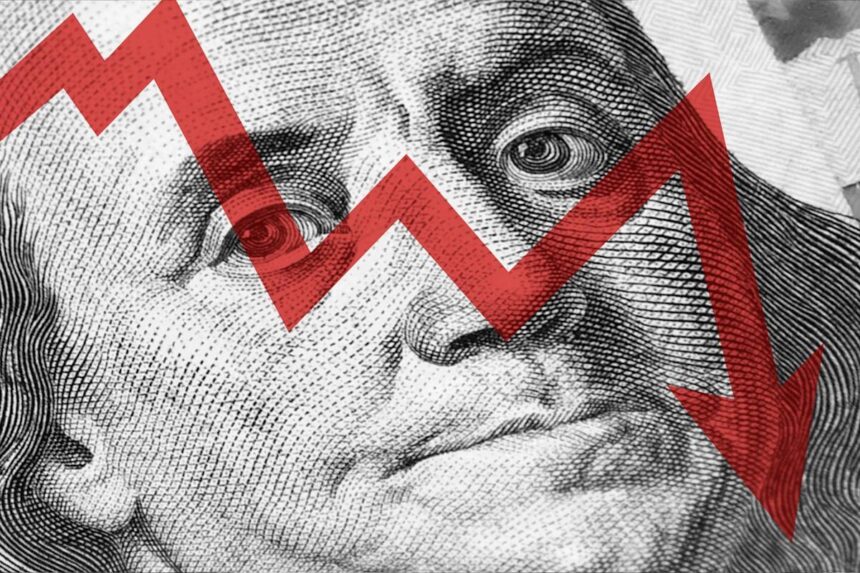
On June 5, the stock market experienced significant declines, with the S&P 500 retreating by 2.6% and the Nasdaq Composite dropping 4.1%. This downturn followed the release of a stronger-than-expected payroll report, revealing that job growth in the U.S. has surpassed 100,000 for three consecutive months, a trend not seen since early 2024. Traditionally, such robust job growth would be viewed positively; however, it has raised concerns about inflation, which has recently reached a multiyear high. Consequently, the likelihood of interest rate cuts has diminished, and many market participants are now anticipating that the Federal Reserve will increase rates instead.
Investor sentiment has shifted markedly since December, when projections suggested potential quarter-point rate cuts in 2026. Current expectations indicate a reversal, with predictions of two quarter-point rate hikes by September 2027. The fundamental difference lies in the strengthened labor market, which previously added only 116,000 jobs last year amid uncertainties in trade policy. In contrast, this year has seen a robust addition of 569,000 jobs. According to Wells Fargo senior economist Sarah House, this uptick reflects a rebound as employers gain more confidence in economic growth, alleviating some uncertainties surrounding trade tariffs under the Trump administration.
Inflationary pressures have also intensified, particularly following military operations in Iran, contributing to a year-on-year increase in the Consumer Price Index (CPI) of 3.8% as of April. Preliminary estimates suggest that inflation may have surpassed 4% in May, with official numbers set to be released on June 10.
The Federal Reserve’s dual mandate of promoting maximum employment and stabilizing prices comes at a crucial juncture, as the resilience of the job market provides the central bank with a greater capacity to raise interest rates without the immediate fear of triggering a recession.
Historically, however, the stock market has reacted negatively to previous interest rate hike cycles. Analysis shows that in the three months following the first rate hike since 1999, both the S&P 500 and Nasdaq Composite have typically seen declines, averaging losses of 7% and 8%, respectively. Higher interest rates not only increase borrowing costs but also enhance the attractiveness of bonds, leading to reduced corporate profits. The recent rise in 30-year Treasury bond yields to 5.18%, a level not observed since 2007, has further escalated concerns.
The prevailing geopolitical tensions, particularly in the Middle East, could amplify these economic challenges. If elevated energy prices significantly impact core inflation—entailing a widespread increase in production and transportation costs—the Fed may respond with aggressive rate hikes, potentially precipitating a stock market crash.
Given this complex economic landscape, investors are advised to carefully consider their positions in stocks associated with the S&P 500 Index. Recent insights from financial analysts highlight alternative investment opportunities that may present better growth prospects, suggesting that diversifying portfolios could be beneficial in navigating the uncertain market conditions ahead.