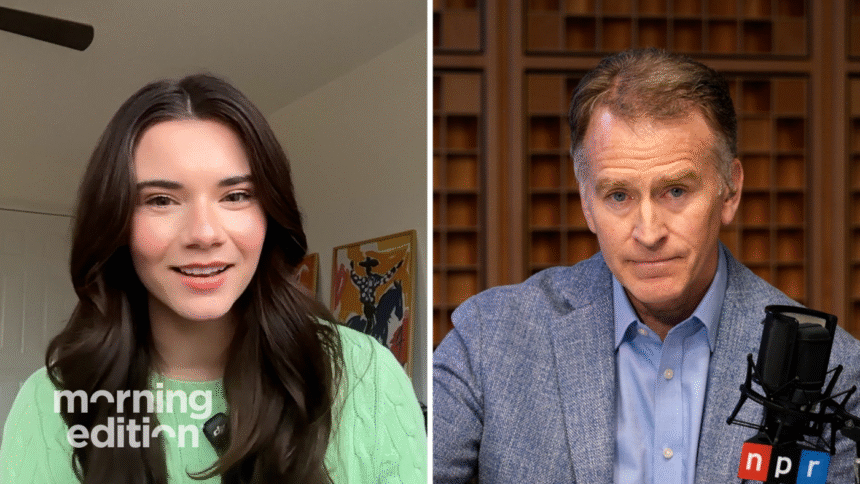
About one-third of Americans now turn to YouTube as a primary source for their news, with many following the rising star Brett Cooper. The 24-year-old hosts The Brett Cooper Show, where she provides predominantly conservative commentary on current events. In her recent broadcasts, Cooper has both praised and criticized former President Donald Trump, and even engaged in an online exchange with Texas Senator Ted Cruz regarding the controversial influencer Nick Fuentes and the label of “Nazi.”
Cooper is part of a broader trend of influencers who interpret the news for their audiences. She first garnered attention as a student at UCLA, where she outspokenly criticized COVID-19 lockdown measures. After joining the conservative news outlet Daily Wire, she launched her own show in January 2023. In a recent interview, she explained her approach to news delivery: “My job is just to talk to people,” she stated, emphasizing her self-identification not as a traditional newscaster but rather as a relatable host. Initially experimenting with interviews, she ultimately chose to speak directly to the camera, creating a more personal connection with her audience.
While her views lean towards populism and conservatism, Cooper believes that viewers are drawn to The Brett Cooper Show for her personality, not solely her ideology. She mentioned her efforts to expand her audience by engaging with a mix of topics, from pop culture figures like Justin Bieber and Blake Lively to more serious political discussions. Initially attracting an overwhelmingly male viewership, she has made strides to connect with women by sharing personal milestones like her engagement and marriage, as well as her recent journey into parenthood.
Cooper describes her political beliefs on family as traditional but clarifies that she does not embody the “tradwife” aesthetic that has gained traction online. She critiques this concept as an empty trend focused more on appearances than genuine values.
Reflecting on the complexities within Trump’s political coalition, Cooper expressed disappointment after the former president advocated for high-skilled immigration during an interview. She publicly disagreed with him, suggesting his comments were concerning and not representative of his supporters. She also voiced criticism regarding Trump’s dismissal of consumer concerns over rising prices, labeling it as a serious misstep.
Conversely, Cooper recently applauded Trump’s commitment to stricter immigration controls, asserting that both illegal and legal immigration are significantly impacting the nation. This duality in her views illustrates her nuanced approach to political commentary.
A particularly contentious moment came when Cooper clashed with Sen. Cruz over his comments about Nick Fuentes, whom Cruz labeled as a Nazi. Cooper defended Fuentes’ right to express himself and warned that criticizing him would likely draw increased attention to his views, citing what she termed the “Streisand effect.” When asked about Fuentes’ claims regarding Jewish influence in America, Cooper stated, “Not really,” but added that she was concerned about the influence of Israel in U.S. policy, indicating a willingness to discuss complex subjects without fully aligning with Fuentes.
Highlighting her desire for independence, Cooper noted that she frequently speaks with political figures seeking insight into younger audiences, yet she remains cautious not to let their views overly influence her. “I want my audience to know that if you’re coming to watch The Brett Cooper Show, she doesn’t have a senator in her ear saying, ‘Hey, these are my opinions, could you share them?’” she asserted, emphasizing her intention to maintain her authenticity.
Her growing influence reflects not just a shift in how news is consumed but also the evolving dynamics within political discourse, especially among younger audiences.