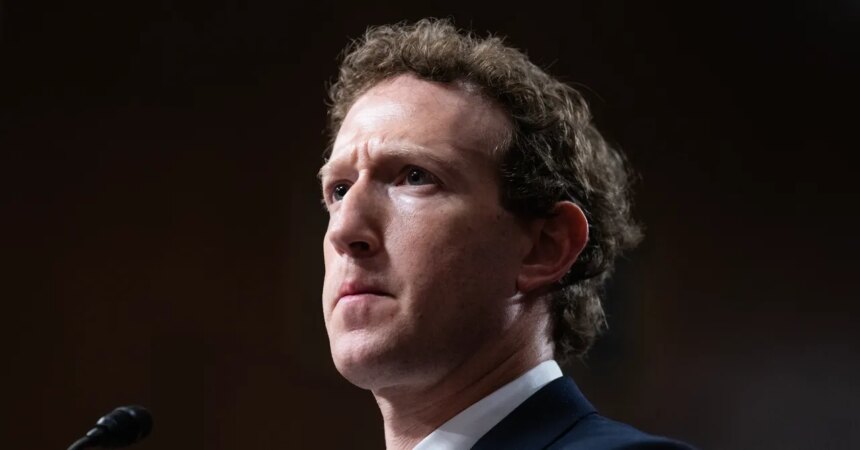
In a recent courtroom exchange, Mark Zuckerberg found himself caught in a web of persistent questioning by attorney Jaron Lanier. Lanier aimed to dissect Zuckerberg’s statements about Meta’s social media platforms, suggesting that the CEO resorted to accusing him of “mischaracterizing” previous remarks when challenged. The discourse exhibited a notable pattern, with Zuckerberg often objecting to the introduction of emails based on their age or his own unfamiliarity with the involved Meta employees.
When pressed to confirm his awareness of Karina Newton, Instagram’s head of public policy in 2021, Zuckerberg denied any knowledge. He meticulously pointed out instances where he was not included in certain email threads, maintaining a careful distance from direct accountability.
Throughout the proceedings, Lanier postulated that Zuckerberg’s responses felt rehearsed, hinting at the media training he presumably received. “You have extensive media training,” Lanier remarked, eliciting a moment of levity when Zuckerberg quipped about his own perceived ineptitude in such situations. This exchange added a seldom-seen human element to the otherwise tense atmosphere.
In an attempt to illuminate the communications strategies employed by Meta, Lanier referenced internal documents depicting how Zuckerberg’s team coached him on answering questions, particularly in high-pressure scenarios like testifying under oath. When confronted with these implications, Zuckerberg appeared unfazed, stating, “I’m not sure what you’re trying to imply.”
Later in the day, Meta’s counsel Paul Schmidt revisited the theme of Zuckerberg’s media obligations due to his position, to which Zuckerberg candidly admitted, “More than I would like.” This sentiment elicited laughter in the courtroom, revealing a slight shift in the audience’s dynamics.
The courtroom proceedings took a curious turn when Judge Kuhl issued a stern warning to those present about the removal of any recording devices, explicitly mentioning smart glasses manufactured by Meta, underscoring the gravity of maintaining courtroom decorum amid ongoing legal scrutiny.
The case, filed by K.G.M. among others, is notable for its avoidance of Section 230, a law that historically offers tech companies protection from liability concerning user-generated content. In response to claims that Meta actively sought to increase user engagement metrics, Zuckerberg asserted that the company had moved beyond tracking minutes spent on its platforms, labeling those figures as mere competitiveness metrics rather than concrete goals.
As Lanier probed deeper into Meta’s policies regarding age limitations and the enforcement of user safeguards, Zuckerberg remained resolute in his defense, framing potential circumventions as an ongoing challenge despite persistent improvements.
A poignant moment arose when Lanier unveiled a massive tarp displaying hundreds of posts from K.G.M.’s Instagram account, capturing the attention of the room. This visual representation illustrated the extent of time and engagement K.G.M. had invested in the platform since signing up at the young age of nine, prior to the app’s implementation of age-verification measures. The sight of the tarp left Zuckerberg momentarily speechless, a stark contrast to his prepared defenses.
As the session drew to a close, Zuckerberg attempted to pivot perceptions of Meta by emphasizing it as a platform for connection and free expression. He reiterated his vision for creating a positive user experience, asserting, “People shift their time naturally according to what they find valuable.” His insistence on the perceived benefits of Meta’s platforms encapsulated the ongoing struggle between potential accountability and the narrative of tech empowerment.