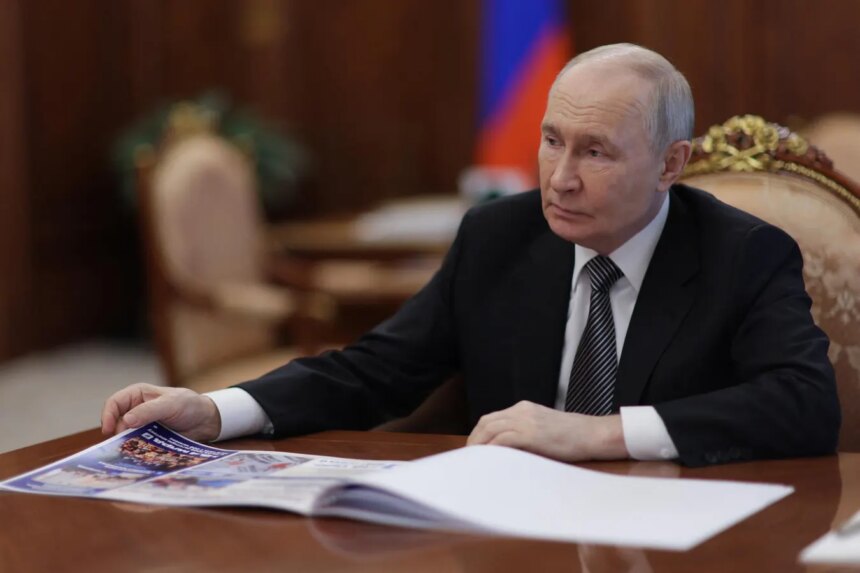
An anonymous user has set the crypto betting platform Polymarket abuzz with a staggering $400,000 wager, speculating that Vladimir Putin will not be the president of Russia by the end of 2026. This development comes as scrutiny intensifies over the potential for insider betting on geopolitical events such as wars on online prediction platforms.
The bet was first uncovered by NBC News and is attributed to an account on Polymarket under the username ZnotluvuiSamez, whose display profile features the Ukrainian flag. This user has a history of placing significant bets related to Russia and Ukraine, with the current wager being the most substantial to date. It consists of “Yes” contracts on the question “Will Putin be out as President of Russia by December 31, 2026?”—a question on which the user invested an additional $50,000 early Thursday morning.
Current market sentiment indicates that bookmakers estimate there is only a 12% probability of Putin losing the presidency, particularly since he is not scheduled for reelection until 2030. If the anonymous bettor’s prediction proves accurate, they stand to win a remarkable $2.5 million.
In addition to the bet on Putin’s potential ousting, the user has also placed a $61,000 wager on Ukraine regaining control of Crimea by the end of the year, an outcome similarly viewed by the market as unlikely, with again only a 12% chance of success.
The mysterious bettor appears to have registered on Polymarket in April, maintaining anonymity through an account linked to an X profile that remains without posts.
This recent activity occurs against a backdrop of ongoing developments regarding the regulation of online prediction markets. Last month, the Commodity Futures Trading Commission (CFTC) proposed new rules aimed at governing these platforms, which include potential bans on wagers that are considered not in the public interest or vulnerable to manipulation via insider information. Currently, it remains uncertain whether bets like the one on Putin would fall under the proposed restrictions.
Adding to the concerns around insider betting, a notable case emerged last April involving a U.S. Special Forces soldier. He was charged with unlawfully using confidential information to secure over $400,000 in winnings on Polymarket related to Venezuelan President Nicolas Maduro. The soldier reportedly made multiple bets just days before a significant raid against Maduro, bringing to light the risks associated with insider knowledge in the betting arena.
In a separate incident, the betting platform Kalshi briefly suspended the accounts of three political candidates who engaged in wagering on their own election outcomes.
The intersection of politics, betting, and potential insider information continues to raise ethical questions and concern among regulators and the public alike.