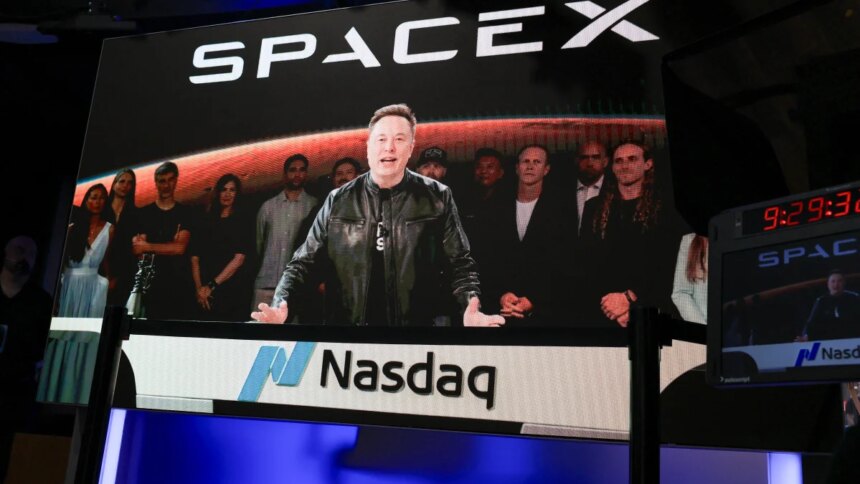
Following its historic IPO on June 12, SpaceX made headlines not only for being the largest initial public offering in history but also for propelling CEO Elon Musk into the ranks of trillionaires. Initially valued at $135 a share, SpaceX’s stock witnessed a surge, rising to over $170 shortly after the IPO. However, this momentum faced a setback in the days that followed.
On June 16, just days after the IPO, the company announced a significant acquisition of AI coding agent Cursor from startup Anysphere, valued at an impressive $60 billion. Following this announcement, SpaceX’s stock briefly surged to over $225, but by the following Wednesday, the excitement began to wane, leading to a 5% drop in share price on June 17 and an additional 3.75% decline the next day.
As of June 19, with trading markets closed, SpaceX’s share price rested at $185. While this represents a decrease from its earlier highs, it remains above its IPO price. However, apprehension lingers as analysts assess the company’s market position. Investor research firm Morningstar has classified SpaceX as “wildly overvalued,” estimating its fair value at $62 per share. In a best-case scenario, Morningstar projected that shares could reach a ceiling of $169 — still below current trading prices but higher than the IPO valuation.
Conversely, not everyone shares the bearish viewpoint. Investment bank Oppenheimer and Co. has revised its optimism concerning SpaceX’s stock, increasing its price projection from $190 to $250. Analyst Timothy Horan highlighted SpaceX’s comprehensive ownership of various facets of the AI stack, suggesting that this integration provides substantial cost and quality advantages. He emphasized that the acquisition of Cursor is instrumental for the company’s future growth trajectory.
As investors ponder the potential for future stock dips, a pivotal threshold looms for Musk. Should SpaceX’s share price fall below $138, it would lead to a significant shift in his financial standing, removing him from the trillionaire status he recently achieved.
The unfolding scenarios present a compelling narrative as investors closely monitor SpaceX’s stock performance and the broader implications of its strategic acquisitions in the evolving AI landscape.