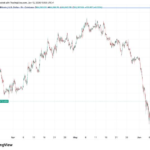
Market sentiment in the cryptocurrency sphere often shifts rapidly, and a recent turnaround involving Bitcoin (BTC) exemplifies this volatility. Just five months prior, Bitcoin’s valuation was riding high, but it has since plummeted to approximately $70,000, marking a nearly 45% drop from its peak of $126,000 reached in October.
This dramatic decline has reshaped perceptions among investors, many of whom once regarded Bitcoin as a volatile asset rather than a stable investment option. Following a modest recovery, questions arise: Is Bitcoin poised for a resurgence?
Initially, the narrative surrounding Bitcoin suggested it was a reliable store of value, particularly as geopolitical crises and macroeconomic uncertainties loomed large. Some hedge fund managers and cryptocurrency enthusiasts even likened it to a digital gold. However, by the end of last year, this notion seemed to lose traction. While gold saw an impressive 75% increase over the previous twelve months, Bitcoin remained far from its all-time high. In recent months, the two assets have appeared to move in starkly opposite directions.
The market reaction following strikes in Iran has added layers of complexity to the current financial landscape. Oil prices surged, a not-so-surprising outcome, but there were also unexpected trends, such as rising yields on U.S. government bonds. Curiously, the U.S. stock market reacted with what some are calling a “benign” response, raising eyebrows among analysts.
Bitcoin’s performance in the aftermath of the Iran conflict has been particularly noteworthy. Initially plummeting at the onset of missile strikes, its value has rebounded, reaching around $70,000 as of March 10. Some analysts speculate that this mini-rally could push Bitcoin towards the $80,000 mark.
However, this upward movement may also be viewed with skepticism. It raises the possibility of a “bull trap,” where the price surges enough to attract new investors, only to subsequently fall again, leaving those who bought into the excitement in a precarious position.
Despite these concerns, research from asset management firm BlackRock suggests a familiar pattern in the wake of financial upheaval: initial panic leads to investment in gold, but as fear recedes, capital shifts toward Bitcoin. While investing in Bitcoin will never be devoid of risks, indicators suggest it may be starting to reclaim its role as a safe-haven asset for those seeking refuge from geopolitical instability. At its current pricing of $70,000, some analysts argue that Bitcoin could be significantly undervalued, inviting renewed interest among investors.