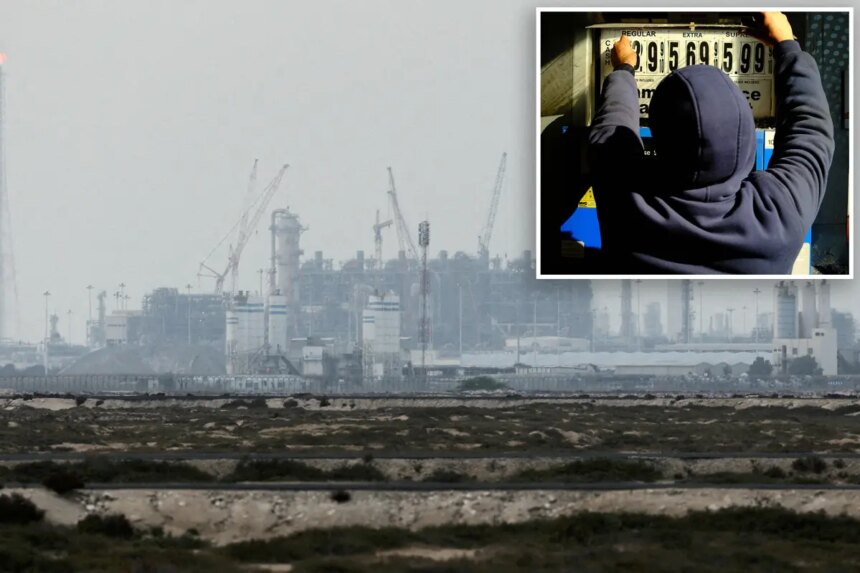
Damage to Qatar’s Las Raffan liquefied natural gas facility has ignited concerns over global energy prices, even as hostilities in Iran show signs of potential de-escalation. The facility, which contributes to a staggering 20% of the world’s liquefied natural gas supply—critical for electricity, heating, and cooking—has suffered from Iranian strikes, exacerbating an already significant disruption in energy supplies globally.
Anne-Sophie Corbeau, a former gas analyst for BP now affiliated with Columbia University’s Center on Global Energy Policy, expressed her dread over the situation, stating, “This has always been my nightmare scenario… the one I didn’t want to happen.”
In the wake of the attacks, gas prices in Europe soared by 30% as markets resumed trading, accumulating a more than 100% increase since the onset of the conflict. The situation has prompted some gas stations in Asia to impose fuel rations to mitigate shortages. Laurent Segalen, a clean energy investment banker, remarked on the dire circumstances, calling the coming months a “bloodbath” for gas importers.
The repercussions of this supply disruption are expected to be felt most acutely in Europe and Asia, though experts like Joe Adamski, managing director of ProcureAbility, predict that the effects will roll back to the United States within about two months. He highlighted the interlinked nature of global energy markets, asserting, “It will affect the availability of the supply even back here in the US.”
As energy prices rise, there are fears that this will lead to an increase in overall inflation. Analysts warn that energy shocks often ripple through consumer prices, impacting goods and services across the board. “Everything is going to get more expensive because oil underlies our economy,” Adamski pointed out, emphasizing oil’s essential role in transportation, food production, and various goods.
The national average gasoline price in the United States surged to $3.91 per gallon amid these developments, reflecting a broader trend in energy markets. Following the Federal Reserve’s recent decision to maintain interest rates amidst uncertainty tied to the conflict in Iran, Chair Jerome Powell cautioned that rising energy costs could reignite inflationary pressures.
Tensions escalated further when Israeli airstrikes targeted Iran’s South Pars gas field, prompting retaliatory attacks from Tehran on key energy installations in Qatar and Saudi Arabia, as well as intensified assaults on vessels in the Persian Gulf. Despite diplomatic calls from U.S. officials to refrain from attacking energy sites, analysts are concerned that significant damage has already been inflicted.
The intricacies of the equipment used in the Las Raffan facility imply that repair operations will be lengthy and complicated. As safety considerations take priority, it is estimated that Qatar could require up to five years to restore full operational capacity. Adamski noted that if the conflict persists, further damage could escalate.
The Las Raffan facility is a colossal infrastructure project, nearly three times the size of Paris, constructed over three decades at a cost exceeding hundreds of billions of dollars. Its production capability is comparable to fulfilling the annual gas demands of the UK and Italy combined.
Iran’s blockade of the strategic Strait of Hormuz—responsible for 20% of global oil supplies—has already contributed to rising gasoline prices. Despite attempts by President Trump to mitigate concerns over surging energy costs, including the release of oil reserves and adjustments to energy sanctions, the global market remains exceedingly vulnerable with long-term supply shortfalls anticipated.
The International Energy Agency’s announcement of a historic release of 400 million barrels of oil seeks to ease the situation, but experts indicate that this measure will not sufficiently compensate for the projected losses in supply.
As speculation mounts regarding the potential escalation of military actions, including reports of the U.S. considering an invasion of Kharg Island—the Iranian energy hub—analysts warn of the increasing risks of unrestricted warfare. Adamski articulated a cautious outlook, acknowledging that while operational targets may help in managing the conflict, the nature of such actions remains deeply worrisome.