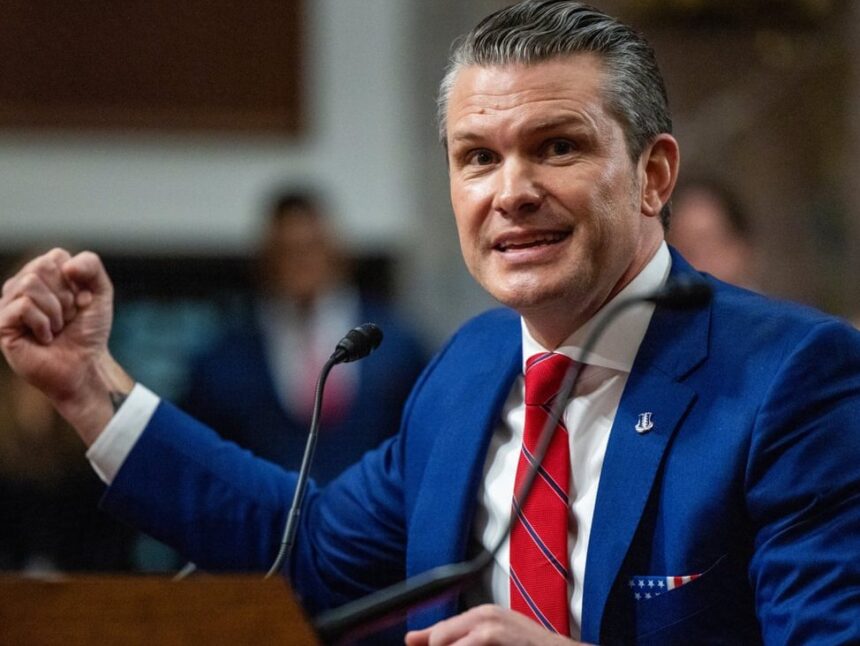
A broker representing US Defence Secretary Pete Hegseth reportedly explored a significant investment in a defence-focused exchange-traded fund (ETF) just weeks prior to the US-Israeli military campaign against Iran, according to a recent Financial Times report. The inquiry was initiated by Morgan Stanley, which sought to allocate funds into BlackRock’s Defense Industrials Active ETF in February. This fund is specifically designed to capitalize on growth opportunities in companies that stand to benefit from increasing military expenditures.
Sources familiar with the matter indicated that the potential investment was noted internally at BlackRock, though it ultimately did not move forward due to limitations related to platform availability at Morgan Stanley. The ETF in question encompasses major US defense contractors, such as RTX, Lockheed Martin, and Northrop Grumman, as well as firms involved in data and defense technology, including Palantir.
These companies are closely linked to US government spending and are often viewed as beneficiaries during times of heightened geopolitical tensions and military activity. The failure to finalize the investment raises questions about whether other defense-related investment avenues were explored in lieu of this opportunity.
The timing of the investment inquiry is particularly noteworthy, given Hegseth’s influential role in shaping US policy towards Iran and his vocal advocacy for military action in the region. The fact that the interest in the investment coincided with preparations for military strikes is likely to attract scrutiny, especially as the performance of the defense sector can be directly influenced by government policy decisions.
While the report does not suggest any wrongdoing, it underscores the sensitive nature of financial dealings in relation to public office, particularly within sectors that are directly affected by geopolitical shifts. This incident also highlights a growing trend of increased scrutiny around trading activities ahead of significant policy or military developments, as markets continuously respond to global events.