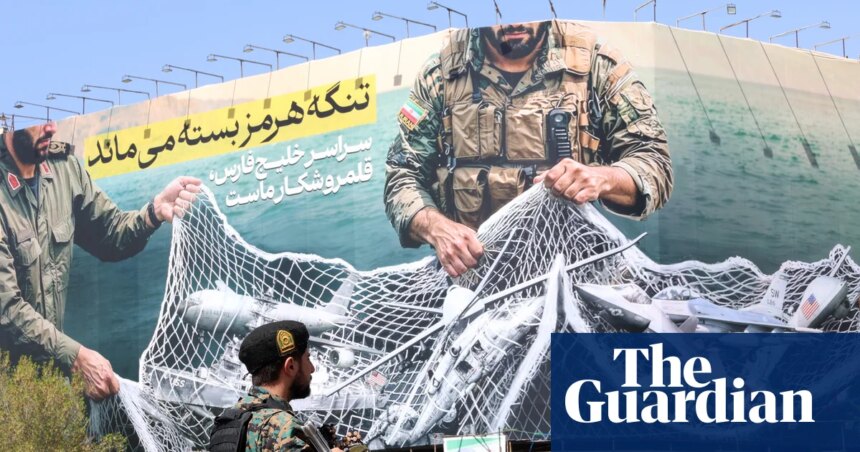
A stark warning has emerged from the International Monetary Fund (IMF) regarding the potential ramifications of escalating hostilities in the Iran conflict, suggesting that further deterioration could lead to a global recession, soaring inflation, and unpredictable financial market reactions.
In its latest half-yearly update, the Washington-based IMF revised its global growth forecasts for 2026 downward, attributing the revisions to the ongoing war in the Middle East, which has contributed to increasing economic uncertainties. The UK, in particular, is highlighted as facing the most significant growth downgrade and is expected to experience the joint highest inflation rate among G7 nations this year, even if the effects of surging energy costs are managed by mid-2026.
The report identifies a “severe scenario” where a prolonged conflict and sustained high energy prices could present a grim outlook—one that would bring the world perilously close to recession, a situation seen only four times since 1980. This comes amidst volatile oil prices, which surged above $100 per barrel as tensions built over failed diplomatic negotiations between the US and Iran and the onset of a US blockade in the strategic Strait of Hormuz.
As global finance ministers and central bank leaders convened in Washington for the IMF and World Bank spring meetings, the organization underscored that the war has cast a shadow over the prospects for international growth. The IMF cautioned that not only developed nations but particularly net energy importers and emerging economies would bear the brunt of the economic fallout.
In the face of these challenges, the IMF revised its forecast for US growth downward by 0.1 percentage points to 2.3% for 2026. However, the UK received the most drastic downgrade, with projections falling by 0.5 percentage points to 0.8%, alongside an inflation rate predicted to approach 4%.
Amid these developments, UK Chancellor Rachel Reeves is set to advocate for a coordinated global response to the economic repercussions of the conflict at the meetings. She emphasized the necessity for the UK to respond to the economic impacts of the war, even if the war is not its direct battle. Reeves expressed her commitment to an economic strategy that is both responsive to changing circumstances and responsible in maintaining stability for households and businesses.
As the risks to the global economy escalate, the IMF outlined three possible scenarios regarding the Iranian war’s impact on growth and inflation. The “reference forecast” assumes that economic disruptions will decrease by mid-2026, projecting a decline in global growth from 3.4% last year to 3.1% in 2026, accompanied by a rise in headline inflation to 4.4%.
Conversely, in an “adverse scenario,” if oil prices remain at $100 this year, global growth could drop to 2.5%, with inflation reaching 5.4%. Under a “severe scenario” characterized by a prolonged war and escalating oil prices above $110 through 2027, global growth could plummet to around 2%, a level often associated with recessionary conditions. Inflation rates under this scenario could exceed 6%, compelling central banks worldwide to raise interest rates to combat inflationary pressures.
The IMF emphasized the critical nature of ending the conflict to mitigate economic damage while urging central banks to remain vigilant. It also recommended that governments contemplating emergency financial measures prioritize targeted interventions over broad, untargeted approaches, which can often lead to inefficiencies and unsustainable debt accumulation.