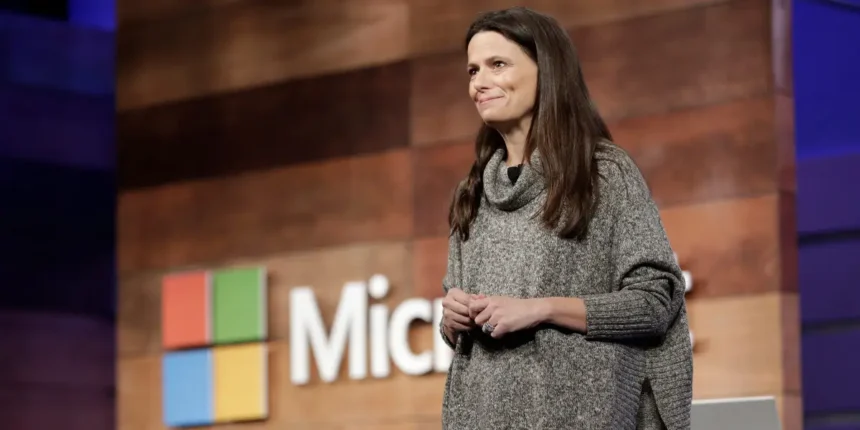
During a recent earnings conference call, Microsoft Chief Financial Officer Amy Hood indicated that the company anticipates a decrease in headcount over the coming quarters. Hood discussed this outlook as part of Microsoft’s projections for the next fiscal year, which begins in July and extends through June 2027.
“We continue to evolve how we operate to increase our pace and agility, and therefore we expect headcount will decrease year over year,” Hood stated. Her comments come in the context of ongoing organizational changes designed to create “tighter, more accountable squads” within the company. These changes have already led to significant job cuts, with thousands of employees losing their positions in recent months.
Earlier this month, Microsoft launched a buyout program aimed at long-serving employees as a cost-saving measure. This initiative potentially impacts as much as 7% of its U.S. workforce, which totals 125,000 people, translating to approximately 8,750 employees. The buyouts target those who wish to retire and whose years of service combined with their age total at least 70.
Despite a robust quarterly revenue of $83 billion and a net income of $32 billion, analysts like Raimo Lenschow from Barclays pointed out that Microsoft’s growth in the cloud sector has lagged behind competitors such as Amazon and Google. In response, Hood projected a growth forecast of 39% to 40% for the company’s Azure business.
This announcement follows a tumultuous period for Microsoft shares, which experienced their worst quarterly performance since 2008. Investor concerns center on the effectiveness of the company’s investments in AI infrastructure and the potential threats posed by AI software solutions. Recent shifts in Microsoft’s strategic partnership with OpenAI also added to the uncertainty; the revised agreement allows OpenAI to collaborate with other cloud providers, notably Amazon, which has begun offering OpenAI’s GPT models on its own cloud services.
Microsoft is making strides in the AI space as well, having recently unveiled a partnership with Accenture to implement its AI feature, Copilot, for nearly 750,000 of Accenture’s employees. In addition, the company announced a new software bundle that includes Copilot, aiming to enhance its offerings in the increasingly competitive tech landscape.