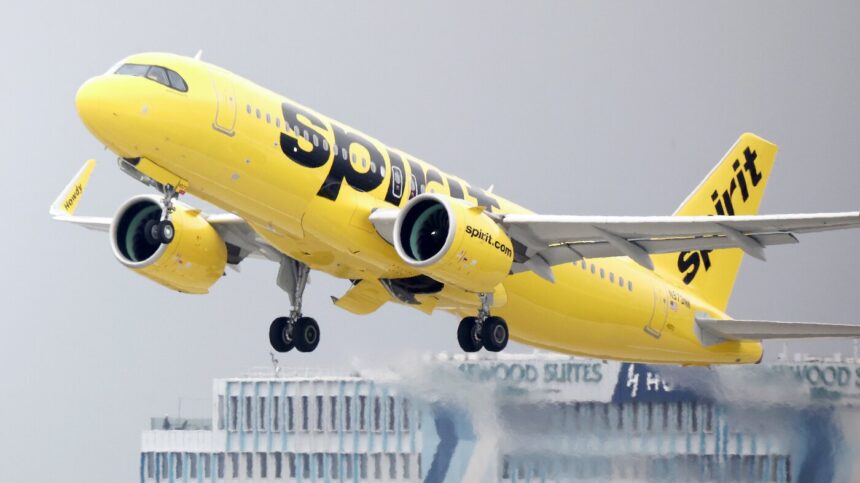
Low-cost carrier Spirit Airlines has announced the immediate cessation of its operations, a significant development in the aviation industry as the airline has struggled for several years. The airline had filed for bankruptcy twice since 2024 and was actively seeking a $500 million federal bailout from the government, but negotiations ultimately failed.
In a statement issued on May 2, 2026, Spirit Airlines expressed its deep disappointment in announcing the wind-down of its operations. The company confirmed that all flights have been cancelled and that customer service is no longer available. Spirit took pride in its 34-year history and the impact of its ultra-low-cost model, hoping to continue serving its passengers in the future.
Based in South Florida, Spirit Airlines had been facing escalating financial pressure exacerbated by rising jet fuel prices, notably due to ongoing geopolitical tensions, including the war in Iran. However, the challenges facing Spirit extended beyond external factors. The airline, ranked ninth in the U.S. by seating capacity, confronted intense competition from larger airlines that adopted similar pricing strategies and services, making the ultra-low-cost model increasingly difficult to sustain.
Spirit Airlines was known as a pioneer in the budget travel sector, providing low fares by eliminating many traditional amenities. However, major legacy carriers began offering their own basic economy options, making it harder for Spirit to maintain its competitive edge.
In a bid to secure its future, Spirit accepted a $3.8 billion acquisition offer from JetBlue in 2023, following a bidding war. However, the U.S. Justice Department intervened, filing a lawsuit to block the merger on the grounds that it could harm budget-conscious consumers. A federal judge sided with the government, rejecting the acquisition.
Throughout its recent struggles, Spirit Airlines had aimed to emerge from bankruptcy as a leaner competitor, yet they were consistently hindered by rising fuel prices and an increasingly challenging industry landscape. Experts cite that as a low-cost carrier, Spirit was fundamentally reliant on maintaining a cost advantage, which it was unable to uphold.
In prior weeks, Spirit had engaged in discussions with the Trump administration for a potential bailout. However, internal disagreements regarding the deal’s feasibility complicated negotiations. On the day before the announcement of Spirit’s operational shutdown, former President Trump indicated that while he wanted to help preserve jobs at Spirit, any assistance would need to be a “good deal” for taxpayers.
During its period of bankruptcy, Spirit gradually reduced its market share, which tumbled to 3.9% of U.S. passengers as of February 2026, down from 5.1% the previous year. Analysts projected that this market share could decrease further to 1.8% in May, leading to Spirit’s status as the country’s ninth-largest airline.
Despite its small market presence, consumer advocates argue that Spirit played an important role in maintaining competitive pricing in the airline industry. They contend that the airline’s existence contributed to lower fares across the sector, benefiting consumers who might not have flown with Spirit directly. The absence of Spirit from the market is expected to lead to increased ticket prices for many travelers.