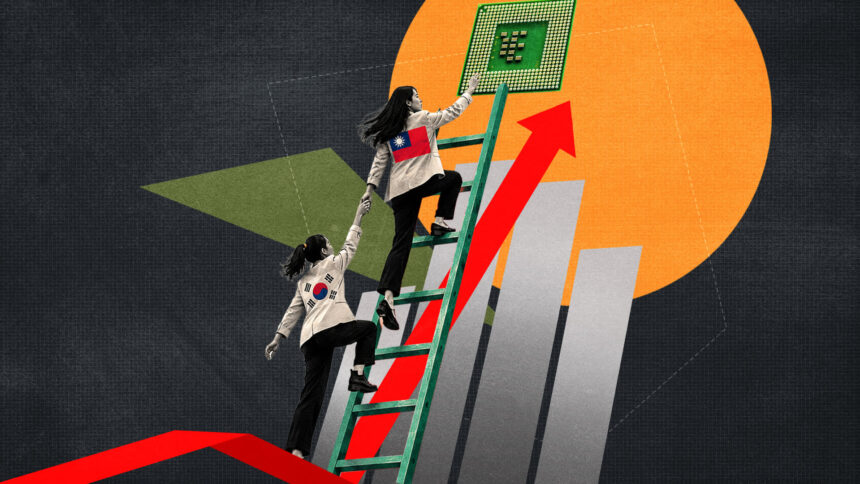
In a notable shift on the global stock market stage, Taiwan and South Korea are experiencing significant rises in their market standings, driven largely by the burgeoning demand for companies supporting the AI infrastructure boom. Investors are increasingly focusing on key players in these regions, leading to substantial capital inflow and market appreciation.
Taiwan’s ascent in the rankings is primarily attributed to Taiwan Semiconductor Manufacturing Company (TSMC), recognized as the world’s preeminent advanced chip foundry. TSMC’s pivotal role in producing cutting-edge semiconductor technology has positioned it at the forefront of the AI revolution, attracting considerable investor interest. The company’s ability to innovate and meet the high demands of AI applications has secured its reputation as a critical player in this rapidly evolving landscape.
Conversely, South Korea’s stock market gains have been propelled by giants such as Samsung Electronics and SK Hynix. Both companies are instrumental in the production of memory chips, which are essential for the functioning of AI systems. As demand for sophisticated AI solutions continues to soar, these firms have reported impressive growth, further enhancing their influence on market dynamics.
However, alongside these developments, a familiar risk is emerging: a potential overwhelming dependency on a select few companies. This trend raises concerns among analysts and investors alike, as the concentration of investment in a small number of firms could lead to vulnerabilities in market stability. Should any disruptions occur within these dominant players, it could significantly impact the broader market, highlighting the need for diversification in investment strategies.
As both regions continue to capitalize on the AI boom, market observers will be closely monitoring the balance between fostering innovation and maintaining stability. The ongoing evolution of the AI sector presents vast opportunities but also inherent risks that require careful navigation as Taiwan and South Korea redefine their positions in the global economic landscape.