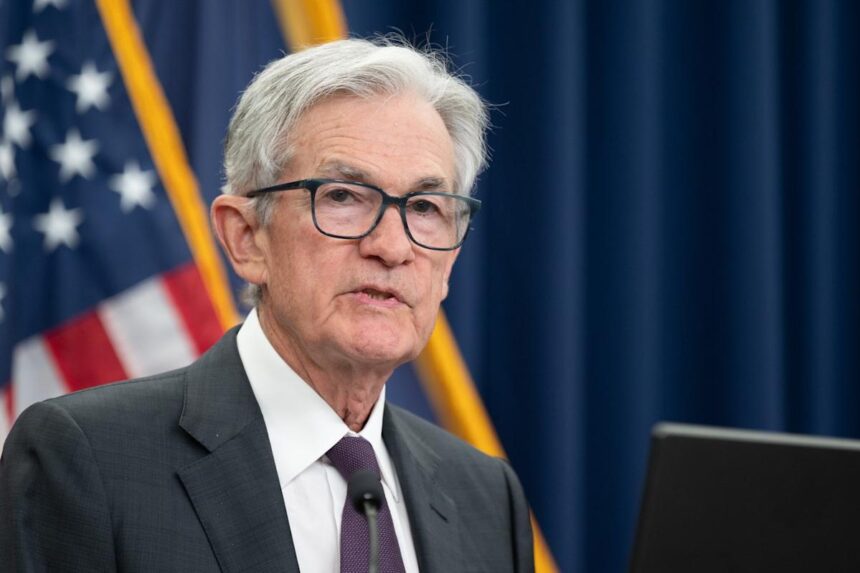
Jerome Powell’s final Federal Open Market Committee (FOMC) meeting on April 29, before transitioning to his role on the Board of Governors, was marked by an unprecedented level of dissent among policymakers, raising concerns that may impact major stock indices such as the Dow Jones Industrial Average, S&P 500, and Nasdaq Composite.
In an unusual twist, the meeting registered four dissensions, a figure not seen since 1992, highlighting a potential upheaval in the Fed’s policymaking landscape. Stephen Miran called for a quarter-point cut to the federal funds target rate, while fellow members Beth Hammack, Neel Kashkari, and Lorie Logan opposed the proposal to incorporate an easing bias statement into the FOMC’s post-meeting communication.
The subsequent release of minutes from the meeting revealed that the divide among FOMC members might have been even deeper than initial reports suggested. While the overall message was one of patience and caution—particularly in light of ongoing inflation pressures linked to persistent tariffs and geopolitical tensions in the energy sector—an underlying sentiment hinted at possible moves towards tightening monetary policy.
A notable section of the minutes indicated a majority of participants felt that tightening might be warranted if inflation were to consistently exceed the 2% target. Many expressed the desire to eliminate the language in the statement suggesting an easing bias, indicating a potential shift to a more neutral stance as soon as the next meeting in June.
The possibility of interest rate hikes looms large, with many members signaling that future inflationary trends, possibly stemming from energy sector volatility, could necessitate such actions. This scenario poses a significant challenge for equity markets, which currently appear historically expensive and were anticipating a series of rate cuts to fuel the growth of artificial intelligence data centers in the coming years.
In an environment where higher interest rates could deter investment in stocks—by making borrowing more expensive and offering safer returns through bonds—the outlook may compel a shift in investor strategies. Powell’s farewell meeting could well be a watershed moment for Wall Street, marking a potential pivot in monetary policy that contradicts previously expected easing.
As investors reflect on these developments, the question arises whether now is the opportune time to invest in the S&P 500. Analysts from a leading investment advisory service have identified alternative stocks that they believe are primed for significant gains, outperforming traditional indices. Historical examples illustrate how early investments in selected stocks have yielded remarkable returns, further emphasizing the wisdom in considering diverse investment strategies beyond major indices like the S&P 500.
As the financial landscape evolves in response to central banking decisions, the implications of Powell’s final meeting could reverberate through various sectors, fundamentally reshaping the conditions under which investors operate.