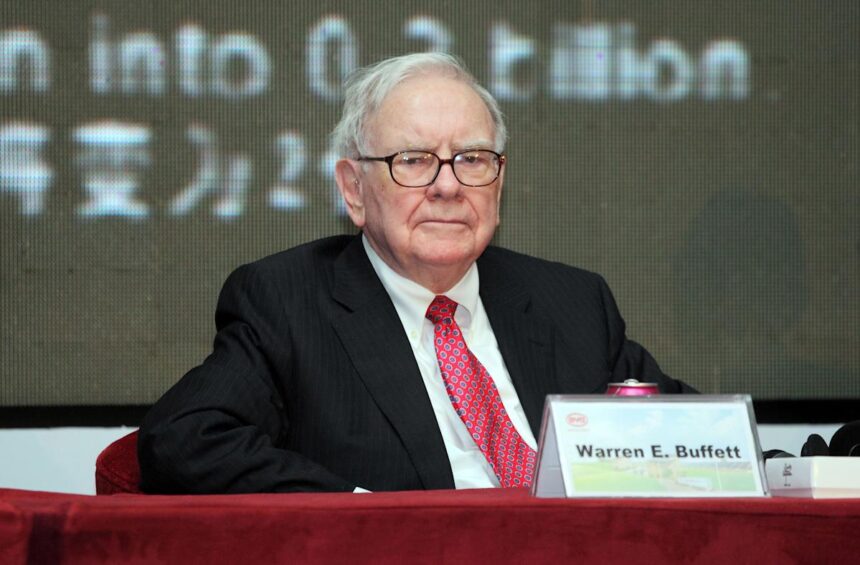
Shares of BYD, a prominent electric vehicle manufacturer in China, encountered a noticeable decline on Monday following the announcement that Berkshire Hathaway has completely divested its stake in the company. This move marks the conclusion of a gradual sell-off that had been taking place since 2022.
According to a recent financial filing by Berkshire Hathaway Energy, the subsidiary that managed these shares, the stated value of its investment in BYD was zero by the end of the first quarter. This information was originally reported by CNBC, revealing the full extent of Berkshire’s exit. Following the news, BYD’s shares on the Hong Kong stock exchange dipped by more than 3%.
Berkshire Hathaway confirmed its complete withdrawal from BYD in a statement to CNBC, although the company did not provide an immediate response to inquiries from Yahoo Finance. A representative from BYD also acknowledged this development, expressing gratitude towards Warren Buffett and Charlie Munger for their long-standing support and investment over the past 17 years. Li Yunfei, a public relations executive at BYD, conveyed these sentiments through a post on Weibo.
Berkshire’s investment in BYD initially commenced in September 2008, during a challenging financial period, with an acquisition of 225 million shares valued at around $230 million. Before the sell-off began in 2022, the total worth of Berkshire’s stake had soared to approximately $7.7 billion. The investment’s early success can be attributed to Buffett’s interest sparked by Munger’s depiction of BYD’s founder, Wang Chuanfu, who Munger described as a unique blend of Thomas Edison and Jack Welch in terms of technical prowess and managerial effectiveness.
Recently, the timing of Berkshire’s exit has been interpreted as strategic, particularly given the mounting challenges facing both BYD and the broader automotive sector. While BYD achieved a significant milestone earlier this year by surpassing Tesla in battery electric vehicle registrations in Europe, the company is also facing signs of slowing growth. Reports have indicated that BYD has reduced its sales target for 2025 in China by up to 16%, signaling the potential for its slowest growth rate in five years.
The highly competitive landscape of electric vehicle production in China, combined with an oversaturation of offerings, could be contributing factors to this deceleration in growth, raising concerns within the world’s largest EV market.