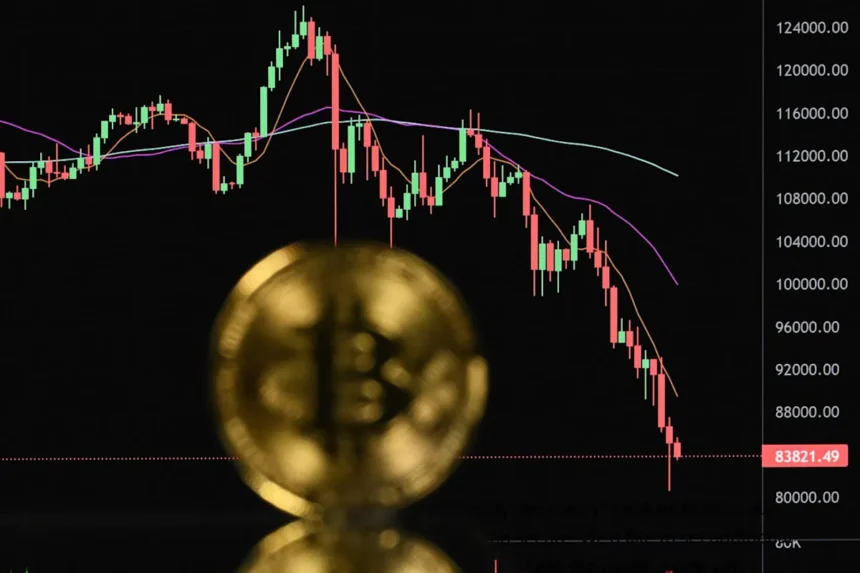
Bitcoin enthusiasts are known for their eagerness to make price predictions, often expressed in terms of U.S. dollars. This trend is prevalent even among non-Americans, who frequently use the dollar as a benchmark for assessing Bitcoin’s value. However, Nuri Katz, president of Apex Capital Partners, argues that this framework may be fundamentally flawed. Katz spoke recently at TheStreet Roundtable, suggesting that dependence on the dollar is a significant risk that is often overlooked in the cryptocurrency space.
Katz contends that the dollar’s status as a universal pricing unit is diminishing more rapidly than most people in the U.S. may realize. He pointed out that Bitcoin’s valuation remains closely tied to the dollar, which he believes is problematic as the currency may not effectively represent the asset class’s real value.
According to Katz, the dollar is not as strong as widely perceived. He highlighted a growing movement globally toward “de-dollarization,” indicating that countries are starting to shift away from reliance on the U.S. dollar. For example, the Israeli shekel has recently reached a 30-year high against the dollar, appreciating 9% in 2026 alone. Similarly, the Russian ruble has emerged as a robust fiat currency, showing a 44% increase against the dollar in 2025.
A significant indicator of the dollar’s weakening is its use in global oil transactions. Katz noted that Indian refiners are now purchasing Russian crude oil using Chinese yuan and UAE dirhams, circumventing the dollar entirely. Furthermore, trade between China and Russia—and the settlements among BRICS nations—are increasingly conducted through the CIPS system, connecting thousands of banks worldwide, independent of the SWIFT network.
Katz expressed skepticism about traditional price discussions surrounding Bitcoin, stating that measuring Bitcoin’s value against the dollar is a flawed approach. He illustrated his point by saying that while Bitcoin’s price might reach lofty heights—such as a million dollars—this could become meaningless if the dollar loses its purchasing power.
He also raised concerns regarding stablecoins, specifically USDT and USDC, which are both pegged to the dollar. This connection means that even the liquidity within the crypto sector is tethered to an asset that Katz sees as weakening. He pointed out that the “real” return on Bitcoin becomes obscured as long as exchanges and pricing tools remain closely connected to the dollar.
Katz advocates for a reevaluation of how cryptocurrencies are valued, suggesting that alternative metrics, such as Bitcoin’s worth relative to gold, equities, or oil, could provide a more accurate picture of the asset’s performance over time. Such an approach might reveal a different narrative compared to what is presented when focusing solely on the U.S. dollar.