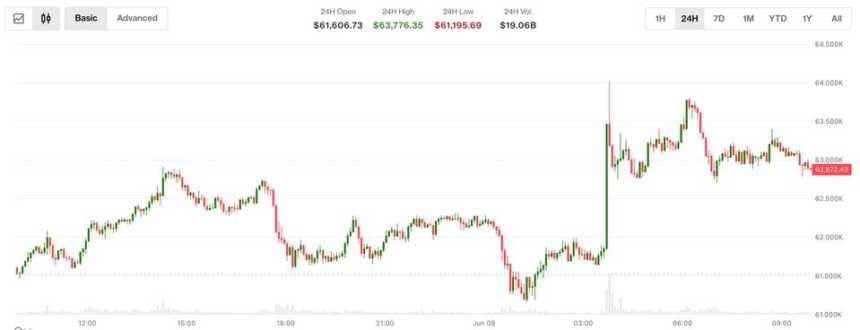
Bitcoin experienced a notable pullback from its recent highs, trading around $62,900 as tensions flared between Iran and Israel. After reaching $63,776 late on Sunday, the leading cryptocurrency faced downward pressure alongside a significant decline in Asian stocks, particularly evidenced by South Korea’s Kospi index, which plummeted over 6.8%, triggering a temporary trading halt. Japan’s Nikkei index also saw a downturn, falling over 3%.
The renewed military conflict, marked by mutual airstrikes, ended a fragile ceasefire and contributed to a sharp increase in WTI crude oil futures, which soared more than 3% to $93.50. In response to the escalating violence, U.S. President Donald Trump urged restraint, requesting Israeli Prime Minister Benjamin Netanyahu to refrain from further retaliation. In a telephonic interview, Trump expressed his concerns, stating, “Israel had its strike and Iran had its strike. We don’t need another one.”
The turmoil in the Middle East added fuel to fluctuations in financial markets, as rising oil prices contributed to an increase in U.S. Treasury yields, which had already surged following the release of a strong monthly jobs report. Typically, higher Treasury yields strengthen demand for the dollar and similar assets, negatively impacting riskier investments such as cryptocurrencies.
Bitcoin’s recent volatility can be attributed to multiple factors, including strategic sales by certain investors, the rising interest in AI-related stocks, and the withdrawal of capital from spot bitcoin exchange-traded funds (ETFs). The cryptocurrency’s price saw a nearly 14% decline over the preceding week, briefly falling below the $60,000 threshold.
Market analysts suggest that volatility could persist in the upcoming week due to ongoing geopolitical tensions. In addition, key economic indicators, including U.S. inflation data and major initial public offerings like SpaceX and Anthropic, are anticipated to influence market liquidity and overall investor sentiment.