The stock market has been on a steady climb throughout 2026, largely driven by optimism surrounding lower taxes, regulatory relief, continued spending on artificial intelligence, and the expectation that monetary policy would soon become more favorable. However, the recent dynamics within the leadership of the Federal Reserve have begun to create challenges that investors must navigate.
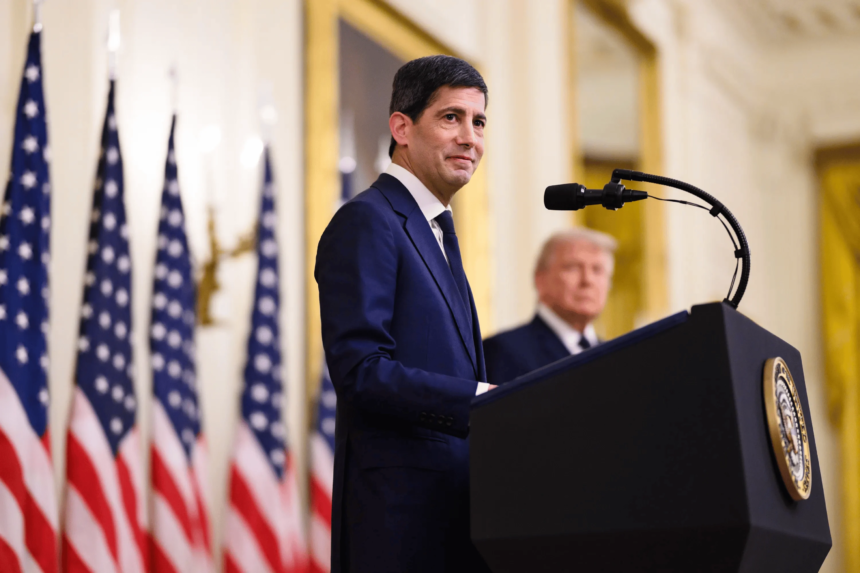
Initial optimism centred around President Trump’s nomination of Kevin Warsh as Federal Reserve Chair. Many assumed that this appointment would signal a shift towards a Fed more amenable to lowering interest rates, which Trump has frequently advocated as a means to stimulate economic growth and business investment. Early reactions in the market reflected this sentiment, with a general expectation that Warsh would be more accommodating than his predecessor, Jerome Powell.
However, the reality of Warsh’s track record complicates these assumptions. Having served as a Fed governor from 2006 to 2011, Warsh developed a reputation as an inflation hawk, prioritizing price stability and the independence of the Fed. His concerns about the Fed’s substantial balance sheet, which currently stands at over $6.7 trillion due to expansive quantitative easing and pandemic-related stimulus, create an inherent tension with Trump’s desire for lower rates.
Recent developments have further muddied the waters. Rising energy prices, particularly linked to geopolitical tensions in Iran, alongside robust labor market data, have diminished the immediate need for rate cuts. This scenario undermines the earlier assumption that Warsh would simply align with Trump’s agenda.
As expectations shift, the market must grapple with a widening “expectations gap.” An analysis of potential policy outcomes reveals a less favorable environment for stocks under various scenarios:
- Higher-for-longer rates would mean increased borrowing costs and lower valuation multiples.
- Balance sheet runoff could drain liquidity from the market, tightening financial conditions.
- Aggressive rate cuts may raise inflation concerns and lead to higher long-term yields.
- A Fed-White House conflict could provoke heightened volatility and uncertainty among investors.
These scenarios indicate that none present unambiguously positive outcomes for the stock market. In fact, Wall Street has already begun to adjust to the potential for less aggressive monetary easing, as Treasury yields surge and investors reassess their optimistic outlook based on the Fed’s anticipated actions.
Investors face a tricky situation. If Warsh opts for a tighter policy stance, financial conditions are likely to tighten further, creating challenges for equities currently characterized by high valuations. The current market, buoyed by enthusiasm for advancements in AI and solid corporate earnings, is not cheap. This leaves little room for error should sentiments shift.
Conversely, if Warsh capitulates to political pressures and aggressively cuts rates, the implications could be similarly negative. Such a move could spark doubts about the Fed’s independence, leading bond investors to demand higher yields to offset inflation fears, consequently raising long-term borrowing costs.
Uncertainty, rather than adverse news, poses a significant challenge for the markets. A visible rift between the White House and the Federal Reserve introduces a level of unpredictability that the market typically struggles to absorb.
The historical context also highlights the potential for market pullbacks. During Trump’s first term, times of misalignment between policy expectations and actual policy delivery often resulted in sharp corrections, despite an otherwise healthy economy.
Moving forward, while the ending of the Warsh-Trump honeymoon phase doesn’t guarantee a bear market, it does diminish the previously assumed tailwinds of lower rates and increased liquidity. The core issue boils down to a loss of certainty, which elevates the risk of volatility and increases the likelihood of a market correction, a scenario not widely anticipated just a few months ago.