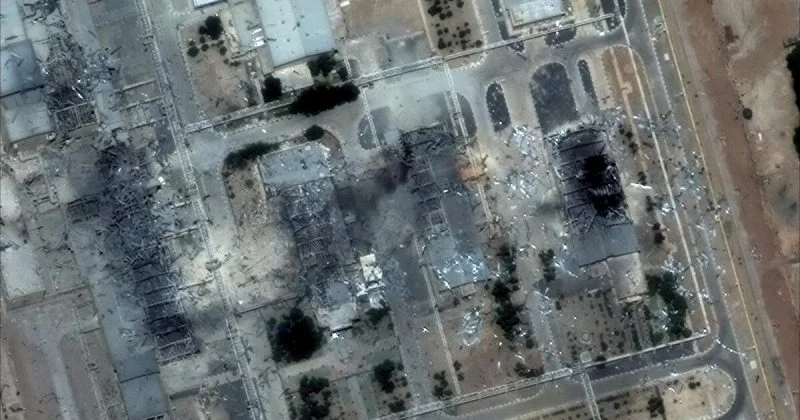
In a significant escalation of military tensions, the United States military launched airstrikes against Iranian missile and drone storage facilities on June 26, 2026. This action came in direct response to a drone attack carried out on June 25 against the Singapore-flagged commercial vessel M/V Ever Lovely in the strategically crucial Strait of Hormuz. The Strait, known as a vital artery for global oil transportation, has increasingly become a flashpoint in U.S.-Iran relations.
Iran’s Islamic Revolutionary Guard Corps (IRGC) swiftly condemned the U.S. strikes, asserting that they amounted to a violation of previously established ceasefire agreements. In retaliation, the IRGC claimed to have conducted attacks on U.S. military positions across the region, marking an intensification of hostilities that have characterized recent interactions between the two nations.
The U.S. strikes targeted not only missile and drone storage facilities but also coastal radar installations vital to Iran’s monitoring of maritime traffic within the Strait of Hormuz. This move underlines the strategic importance of such radar systems, as they are crucial for Iran to track the movements of vessels in this sensitive waterway.
This round of military engagement is part of an ongoing cycle of retaliatory actions between Washington and Tehran, which has significantly worsened throughout 2026. The tensions flared following extensive U.S.-Israeli military operations aimed at Iranian military installations and leadership centers in February of the same year.
The unfolding conflict has also had ramifications in global financial markets, particularly in the cryptocurrency sphere. Bitcoin, often viewed as a barometer of geopolitical stability, experienced significant volatility. Following prior U.S. airstrikes in May that had sent Bitcoin prices tumbling below the $73,000 mark and resulted in nearly $1 billion in liquidations, the cryptocurrency was trading between $61,000 and $62,000 during the June escalation. This dip highlights the susceptibility of leveraged positions within the crypto market to external shocks, amplifying both gains and losses.
Adding another layer of complexity to the situation, the ongoing instability in the Strait of Hormuz could disrupt maritime traffic, potentially leading to higher energy prices. Such increases in oil prices could exacerbate inflation concerns globally, complicating strategies for financial institutions like the Federal Reserve. This interaction between geopolitical tension and market dynamics is causing investors to reassess their risk profiles, particularly concerning assets like cryptocurrencies.
As tensions continue to simmer, the interplay between military actions and market reactions remains a crucial area for observers and stakeholders on both sides of the economic spectrum.