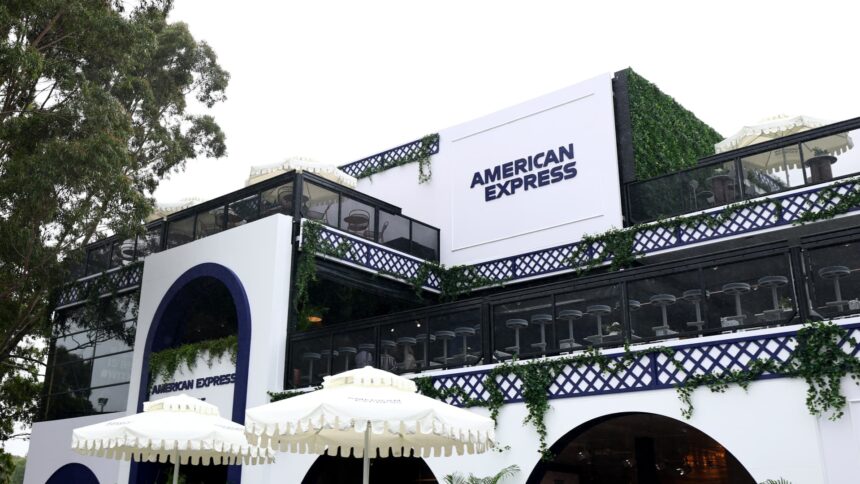
In a bold movement to expand the definition of luxury credit experiences, American Express and Chase are increasingly creating exclusive lounge environments that reach far beyond traditional airport settings. From pop-up lounges at major cultural and sporting events to permanent fixtures in stadiums, these financial institutions are banking on premium hospitality to attract and retain affluent cardholders.
Donald Fandetti, a managing director from Wells Fargo, notes that such lavish offerings serve as critical differentiators in a crowded market. The focus is clearly on enhancing the value proposition of high-end credit cards, such as the American Express Platinum and Chase Sapphire Reserve, which now carry annual fees of $895 and $795, respectively. These fees are complemented by an array of perks—dining credits, hotel upgrades, and exclusive experiences—all designed to justify the costs and draw high-spending consumers.
In 2025, American Express offered its Platinum cardholders exclusive lounge access at prestigious events like the US Open, Stagecoach music festival, and Formula 1 races globally. Meanwhile, Chase Sapphire Reserve cardholders enjoyed similar privileges at events such as Lollapalooza, Miami Art Week, and the Sundance Film Festival. Although some lounges are open to all attendees, many are reserved solely for premium cardholders, catering to a demographic that craves exclusivity.
Laura Picciano, general manager of Chase Sapphire, emphasizes the loyalty of this customer segment. “Once you get their business, there’s a lot of loyalty there,” she explains. This is reflected in the increasing consumer spending among cardholders with high annual fees, who typically display a significant financial advantage over counterparts with lower credit scores.
Lounges are not just limited to fleeting events; they are becoming permanent installations in significant venues around the world. American Express has lounges in over 20 locations, including Hard Rock Stadium in Miami and the O2 arena in London. This trend has also extended to Chase, which has established dedicated spaces at key venues, including Madison Square Garden.
Chenzi Xu, an economics assistant professor at UC Berkeley, notes that the value of these lounges increases with the number available across various locations, providing cardholders with extensive accessibility. Chase’s commitment to improving its rewards has intensified its competition with American Express, further enhancing benefits for premium credit card holders.
Recent statistics show that affluent consumers—defined as households earning over $200,000—spend significantly more on discretionary purchases compared to the general population. Data from J.D. Power indicates that cardholders with fees exceeding $500 spend roughly 2.8 times more than those with lower fee cards, reinforcing the credit card issuers’ focus on attracting high spenders.
Furthermore, both companies leverage complimentary offerings, such as gift bags, premium viewing areas, and special event access, to enhance the overall consumer experience. By aligning these benefits with high-profile events and popular culture, brands are establishing an emotional connection with customers, hoping to secure their loyalty.
The partnerships formed between credit card companies and various venues or events are pivotal. For instance, American Express has collaborated with high-profile artists and sports leagues, while Chase offers unique experiences like dining events at FIFA World Cup locations. The aim is to integrate their offerings in ways that resonate deeply with cardholders, turning these financial products into lifestyle brands that enhance their users’ experiences.
Through these strategies, both American Express and Chase continue to refine the art of combining luxury with exclusivity, recognizing the pivotal role affluent consumers play in an evolving economic landscape. The trend reflects a growing awareness among credit card companies of the importance of providing unique, high-value experiences tailored to their most dedicated clientele.