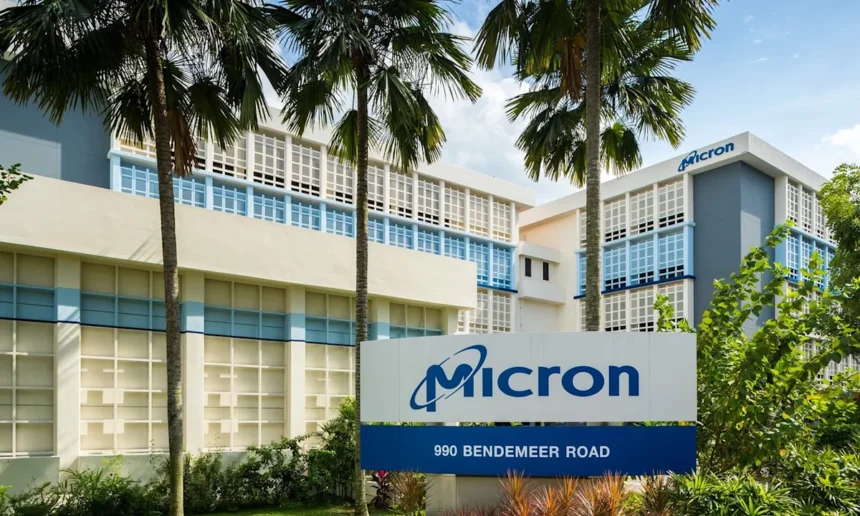
Micron Technology has experienced a remarkable surge in its stock value, showing a staggering 241% increase in 2026, making it the second-highest performer in the Nasdaq-100. Despite this rapid ascent, many investors may perceive that the opportunity for profitable returns has passed. However, analysts suggest that the company’s potential has only just begun to reveal itself, driven by an ongoing increase in demand for advanced memory solutions in artificial intelligence (AI) data centers.
The primary driver behind Micron’s impressive growth is the unprecedented surge in demand for memory components such as DRAM, NAND, and high-bandwidth memory (HBM). The company is strategically positioned to capitalize on significant investments by “hyperscalers”—tech giants who are investing heavily in building new data centers. This has led to acute shortages in memory products, giving Micron substantial pricing power in one of the highest-growth segments of the chip market.
Unlike previous cycles in the memory industry characterized by broad demand, the current landscape is shaped by AI-driven requirements that center around specific products, bolstering Micron’s competitive viability against other major players like SK Hynix and Samsung. Long-term strategic agreements with key customers are expected to enhance revenue stability and mitigate traditional market volatility.
Given the ongoing structural expansion in the memory and data storage market, Micron’s financial outlook appears more promising than in previous cycles. Analysts predict that Micron’s earnings per share (EPS) will soar to $73.32 for the current fiscal year and escalate to $149.64 the following year. Such forecasts reflect substantial optimism regarding continuous AI infrastructure development.
Currently, Micron’s stock is trading at a forward price-to-earnings (P/E) ratio of 6.7, which is considered low, especially when compared to its projected earnings growth. This valuation suggests that the market may still regard Micron as part of a cyclical industry rather than acknowledging its fundamental shift into a high-growth phase. Financial experts believe this discrepancy presents an opportunity for investors, as the demand for AI-driven memory solutions is likely to further solidify.
For the stock to reach a price of $2,000, analysts warn that Micron’s EPS would need to nearly double from projections, but even achieving a modest P/E expansion to 13 would signify considerable growth potential compared to its current valuation. Several memory and storage stocks have previously undergone similar valuation upgrades, indicating such a change is within the realm of possibility.
However, potential investors are urged to exercise caution. Despite Micron’s promising trajectory, it did not make it onto a recent list of the top ten stocks recommended for long-term growth by financial analysts. Historical performance of stocks recommended by this advisory service suggests strong returns—for example, investments in Netflix and Nvidia at earlier recommendations yielded phenomenal growth. While Micron’s future could be bright, the decision to invest should weigh against other potential opportunities available in the market.