After reaching an all-time high in October 2025, bitcoin has faced significant challenges, losing nearly 50% of its value as more investors withdraw from high-risk bets. Currently, with a market cap of $1.23 trillion, bitcoin is precariously positioned around the crucial $60,000 mark, regarded by many traders as pivotal for its future.
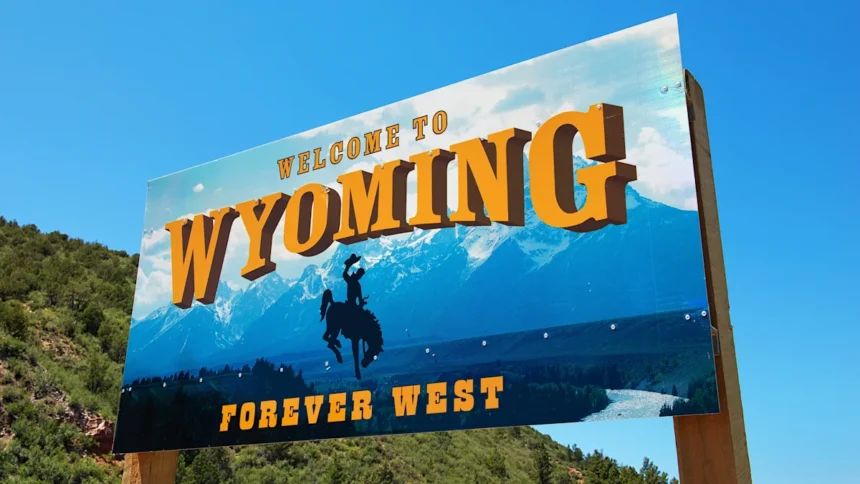
In a noteworthy development amid this turbulent landscape, Wyoming has emerged as the first U.S. state to introduce a government-backed stablecoin, dubbed the Frontier Stable Token (FRNT). This initiative aims to not only modernize payments but also attract financial innovation and potentially generate revenue for public schools. However, questions loom regarding its actual usage in a state where traditional payment methods still dominate.
Wyoming, home to fewer than 600,000 residents, has traditionally been associated with oil and agriculture rather than financial innovation. Yet, over the past decade, state lawmakers have worked diligently to cultivate a crypto-friendly environment, passing approximately 50 laws designed to entice digital asset companies. These initiatives have attracted attention, leading cryptocurrency exchange Kraken to relocate its headquarters to Cheyenne from San Francisco.
Governor Mark Gordon emphasized the stablecoin’s intent to prioritize stability over rapid growth. “We are methodically engineering a secure, U.S. Treasury-backed digital asset designed to safely bridge the gap between traditional finance and modern digital innovation,” he stated. Each Frontier Stable Token is pegged to $1, backed by reserves of cash and short-term U.S. Treasury bills, aiming to provide users with a reliable value.
Despite the ambitious goals, adoption has been slow, with the total market cap for Frontier Stable Tokens currently around $1 million—minuscule compared to established private stablecoin entities like Tether and USDC, which collectively command hundreds of billions in market circulation.
Rob Jennings, co-founder of the Wyoming-based blockchain startup CattleProof Verified, affirmed the token’s potential but expressed skepticism about its commercial viability at this stage. The broader impact of the token could be significant; unlike many private stablecoins, FRNT was created with a public purpose, potentially allowing for funding mechanisms that could benefit public education.
The backing for the stablecoin is structured around investments in Treasury bills. The idea is that after covering operational costs and establishing a reserve buffer, interest generated could be partially directed toward educational funding, thereby providing a new revenue avenue for the state without tax increases.
Other states, including Delaware, New Hampshire, and North Dakota, are reportedly considering similar initiatives. North Dakota is even developing its own digital currency, Roughrider Coin, aimed primarily at banks and credit unions.
While Wyoming’s foray into stablecoins could inspire other states, it also emphasizes the growing importance of stablecoins, particularly as traditional cryptocurrencies like bitcoin continue to face volatility. Some financial experts, however, caution about the inherent cybersecurity risks associated with state-backed digital assets, emphasizing the need for robust protective measures.
As investments in blockchain technology from banks and financial institutions increase, stablecoins are increasingly viewed as viable bridges between conventional finance and the digital asset world. Wyoming’s experiment could serve as either a blueprint for other states or a cautionary tale, positioning the state at the forefront of a vital intersection between traditional and digital finance.