Bitcoin experienced a rally that peaked near $79,400 on Sunday night but is now showing signs of fatigue, with the price currently hovering around $77,000. Several market indicators suggest a potential short-term weakness for the cryptocurrency.
One significant flag is the shift in the Coinbase premium index, which has turned negative for the first time since April 8, as reported by Coinglass. This change to -0.04% follows a two-week trend of positive readings, indicating robust demand from U.S. investors. During this positive stretch, Bitcoin’s price surged from $66,000 to almost $79,000. The Coinbase premium measures the price difference between Coinbase—a platform favored by U.S. institutions—and offshore exchanges like Binance. A negative premium implies that U.S. investors are not buying aggressively, increasing reliance on offshore trading activities. Historical data suggests that when the Coinbase premium dips into negative territory, it often precedes price pullbacks or periods of consolidation.
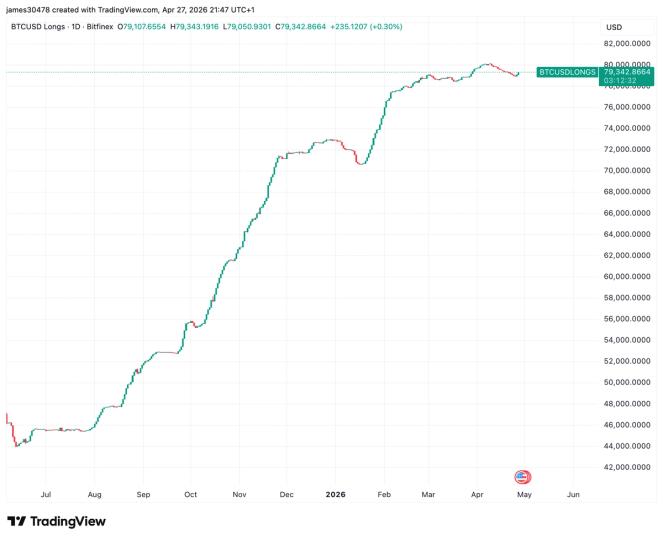
In addition to the Coinbase index, the movements of a large Bitfinex whale, which has been closely monitored for its impact on pricing, present another concern. This whale currently holds 79,342 BTC, just below its previous cycle peak of 80,100 BTC. Historically, this entity tends to offload its holdings once a local market bottom is established or when there’s tangible upward momentum. The whale’s sustained high exposure, despite Bitcoin’s recent price surge, indicates a hesitance in pursuing short-term gains, thereby heightening the risk of a price drop.
Another notable factor is Bitcoin’s inability to reclaim the short-term holder realized price (STHRP) set at $79,200. The STHRP reflects the average acquisition cost of coins held for less than 155 days—this group typically reacts swiftly to market fluctuations. A prolonged period under this metric could encourage recent buyers to exit their positions, exerting additional pressure on the Bitcoin price.
Lastly, the commencement of the flagship Bitcoin conference adds another layer of uncertainty. Previous events have often seen initial gains erode, and historical trends suggest that further declines may soon follow.
As market participants evaluate these indicators, the outlook for Bitcoin remains cautious, signaling that traders should brace for potential volatility in the coming days.