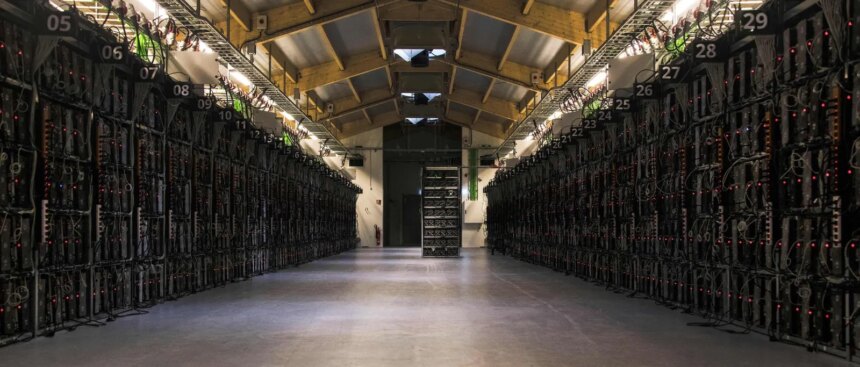
In the heart of Iceland’s dramatic volcanic landscape lies a significant player in the cryptocurrency sphere: one of the world’s largest bitcoin factories, known as ‘Genesis Farming.’ This facility operates on the abundant renewable energy sourced from the surrounding area, powering an extensive array of mining rigs that contribute substantially to the bitcoin network.
Alongside this manufacturing hub stands George Kikvadze, a pivotal figure in the cryptocurrency landscape and the person behind the momentum of Bitfury, one of the most influential companies in the bitcoin ecosystem. In a recent interview, Kikvadze highlighted a remarkable piece of history—a 2×3 foot circuit board from Bitfury’s early mining operations, which famously mined 400,000 bitcoins. He expressed regret that many venture capitalists missed out on this opportunity early on.
Kikvadze’s journey, chronicled in his memoir “And Then You Win,” details the rise of Bitfury from its humble beginnings in Eastern Europe to a powerhouse with a global presence, employing over 1,000 people across 16 countries. The company harnessed significant computing power, operating data centers in countries such as Canada and Iceland, and was responsible for as much as 40 percent of the bitcoin network. Bitfury also helped launch several well-known miners in the industry, including Hut 8 and Cipher Mining.
Kikvadze’s tale begins with a formative experience: witnessing his family’s savings disappear during the collapse of the Soviet Union. This childhood trauma instilled in him an understanding of the fragility of financial systems, teaching him to be wary of centralized authority. After moving to the U.S. and establishing a career in hedge funds, the world of bitcoin captivated him in 2013, leading him to partner with Valery Vavilov, who was instrumental in launching Bitfury.
The vision for Bitfury extended beyond just mining; the goal was to create a full-stack bitcoin infrastructure company. Vavilov emphasized the importance of building not only mining operations but also the essential tools necessary for the burgeoning cryptocurrency industry. One of their innovative strides came with the development of their own AI-integrated chips, which positioned Bitfury as a competitor against established Asian manufacturers.
Despite initial skepticism from venture capitalists in Silicon Valley, who were wary of bitcoin investments, Kikvadze and his team leveraged their connections to secure favorable energy rates and establish profitable mining facilities. By 2015, Bitfury was ready to release a 28-nanometer chip that firmly established its role in the competitive chip manufacturing sphere.
A dramatic turning point occurred in 2016 when Bitfury faced a major crisis with its cutting-edge 16-nanometer chip. After millions had been invested upfront and a backlog of orders developed, production issues left the company in a precarious situation—investigations indicated the possibility of industrial espionage from competitors. Navigating this crisis proved to be one of Kikvadze’s most challenging moments, overshadowing even company layoffs during market downturns.
During market fluctuations, Kikvadze demonstrated his strategic acumen during competitors’ events, finding ways to outmaneuver them while securing additional deals on the side. Yet, by 2022, with the unpredictable pattern of the cryptocurrency market exacerbated by the FTX collapse, Bitfury made the difficult decision to phase out its chip manufacturing operations.
As the industry evolves, Bitfury continues to engage in high-performance computing, cloud solutions, and blockchain services, seeking to redefine its role in a changing technological landscape. The tumultuous events in the cryptocurrency market serve as a reminder of both the volatility and potential growth within this space.
Kikvadze’s memoir not only narrates the history of Bitfury but also addresses the larger narrative of bitcoin’s evolution. With many pioneers retreating from the limelight, there’s an imperative to documentbitcoin’s early challenges and triumphs. Kikvadze’s personal account serves as a vital contribution to understanding the cryptocurrency’s origins while offering insight and inspiration to aspiring entrepreneurs navigating today’s landscape.
His closing thoughts echo sentiments vital for anyone in business: the ability to adapt, persist, and ultimately thrive amid challenges, highlighting a journey from miners to builders, and finally to enablers in the cryptocurrency world.